

Stock Market Investment Scams: Retired Official Duped of ₹38.5 Lakh in Latest Fraud Wave
A retired government official in Hyderabad recently lost ₹38.5 lakh to a highly sophisticated stock market investment scam India, marking a dangerous escalation in cyber fraud targeting senior citizens. Cybercrime departments across the country have issued urgent warnings as fake trading academies and fraudulent WhatsApp groups continue to drain bank accounts of unsuspecting retirees.
The reality is brutal. These are not amateur hackers operating from dark basements; they are organized syndicates running highly convincing, simulated trading platforms that look identical to legitimate institutional terminals. Understanding the mechanics of a stock market investment scam India is the first step toward protecting your hard-earned savings from these digital predators.

How This Stock Market Investment Scam India Works
The scammers rely on psychological manipulation, false authority, and a simulated sense of urgent wealth creation. They systematically isolate the victim from their trusted financial circle before wiping out their savings.
Step 1: The WhatsApp and Telegram Bait
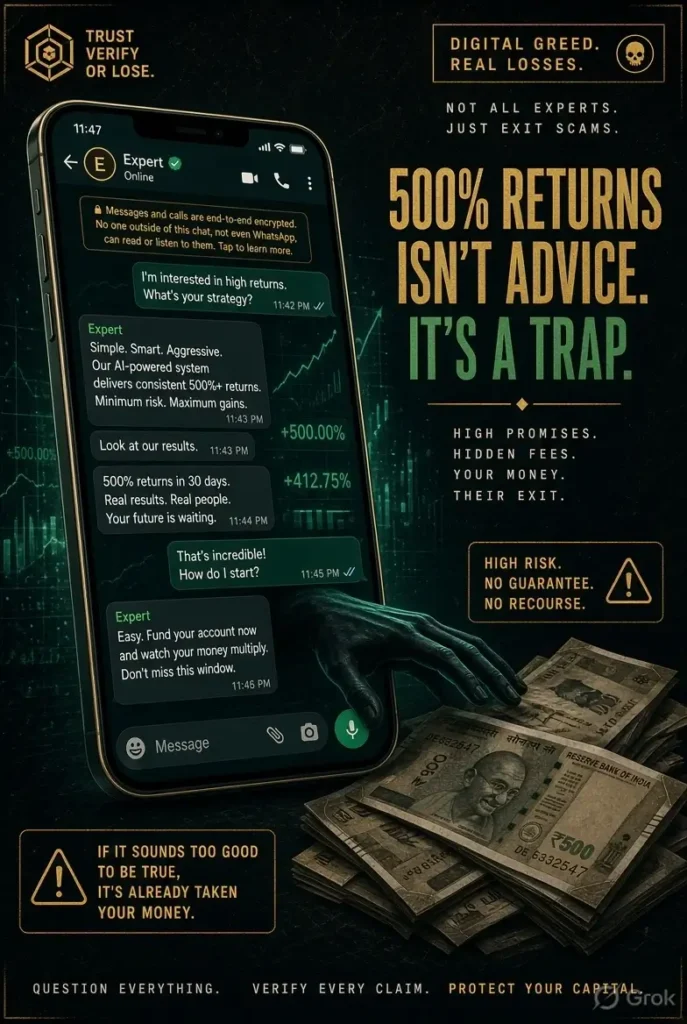
It always begins with an unsolicited invitation. You are added to a WhatsApp group or Telegram channel with a high-sounding name like “Elite Institutional Investors Hub” or “Global Trading Academy.” To build trust, scammers impersonate well-known Indian fund managers or market gurus.
Consider the case of Ramesh, a retired public sector employee from Pune. He was added to a group boasting 150 active members. Daily, dozens of “members” posted screenshots of massive profits, thanking the “Professor” for life-changing stock tips. In reality, 95% of those members were automated bots or co-conspirators using fake Indian phone numbers.
Step 2: The Fake Trading App and Simulated Profits
Once you show interest, the scammers direct you to download a custom application via a third-party link, bypassing the official Google Play Store or Apple App Store. They might even ask you to access a web portal designed to mimic major financial institutions.
To make the stock market investment scam India feel authentic, they instruct you to transfer a small initial amount—say, ₹25,000—to a designated corporate bank account. Within days, the app shows your balance has ballooned to ₹45,000. They even let you withdraw ₹5,000 to your real bank account, establishing absolute trust.
Step 3: The Trap and the Fake Tax Demand
Once your guard is down, they push you to invest your life savings. In the Hyderabad case, the retired official was induced to transfer a total of ₹38.5 lakh across multiple transactions to various shell bank accounts. The fake app showed his portfolio had grown to an incredible ₹1.2 crore.
However, when he tried to withdraw his funds, the trap snapped shut. The scammers claimed his account was flagged for suspicious activity. To release the funds, he was told he must pay a 20% “institutional tax” of ₹24 lakh upfront. This is where victims realize they have been conned, as the scammers immediately block their numbers once they refuse to pay more. This tragic pattern is typical of the modern stock market investment scam India that is currently sweeping across major metropolitan cities.
| Stage of Scam | Victim’s Action | Scammer’s Illusion | Actual Reality |
|---|---|---|---|
| Onboarding | Joins WhatsApp group | Expert advice & community success | Bots and fake screenshots |
| Initial Deposit | Transfers ₹25,000 | Portfolio grows by 80% in days | Manual entry on a fake dashboard |
| The Hook | Transfers ₹38.5 Lakh | Portfolio shows ₹1.2 Crore value | Money transferred to shell accounts |
| The Exit | Attempts withdrawal | Demands 20% tax to release funds | Scammers ghost the victim completely |
How to Protect Yourself from Investment Fraud
Protecting your hard-earned money requires strict digital hygiene and a healthy dose of skepticism. The RBI has repeatedly warned citizens never to transfer money to personal or unverified corporate accounts for stock trading.
1. Verify SEBI Registration
Every legitimate stockbroker, portfolio manager, and investment advisor in India must be registered with the Securities and Exchange Board of India (SEBI). Never trade through an entity that cannot provide a valid registration number. You can verify these details directly on the official SEBI portal before committing a single rupee.
2. Avoid Third-Party App Installations
Never install trading applications via APK files, WhatsApp links, or untrusted websites. Legitimate brokers like Zerodha, Groww, Angel One, or ICICI Direct will only distribute their software through official app stores. If an app requires you to change your phone’s security settings to install it, delete it immediately.
3. Reject “Guaranteed” High Returns
The stock market carries inherent risks. Anyone promising guaranteed weekly returns of 10%, 20%, or more is running a scam. Real equity investing requires patience, risk management, and sound strategy. If you want to grow your wealth safely, consider building a diversified portfolio using mutual funds, but make sure to check how your choices fit your long-term goals. For instance, younger investors should evaluate if they should avoid debt mutual funds for young investors India before making sudden portfolio shifts.
Final Thoughts
The rise of the stock market investment scam India is a sobering reminder that financial security is not just about earning and saving; it is about fierce protection. Scammers prey on the fear of missing out (FOMO) and the desire for quick financial freedom. If you have been targeted, file an immediate complaint on the National Cyber Crime Reporting Portal (cybercrime.gov.in) or call the national helpline at 1930.
Do not let a moment of curiosity wipe out decades of hard work. Always keep your financial decisions grounded in verified, regulated channels, and never let a stranger on WhatsApp dictate your investment journey.

This article is for educational purposes only and does not constitute financial advice. Figures, examples, and outcomes are illustrative and vary based on individual circumstances and lender policies. Always consult a certified financial advisor before making major financial decisions.