

Lucknow Doctor’s ₹3.52 Crore Loss: 4 Proven Warning Signs of a Trading App Scam
A Lucknow doctor has reportedly lost ₹3.52 crore in a fake trading app scam, a warning for anyone approached through social media, messaging groups or unsolicited calls. The available information does not establish the exact date or every step in this case, but the risk is familiar: a convincing app or dashboard can make fabricated profits look real until a withdrawal fails.
A trading app scam often borrows the look of legitimate investing to win your trust, then pressures you to transfer more money. The screen can be persuasive. It is not proof that your money is invested.

How This Trading App Scam Works
Trust comes before the transfer
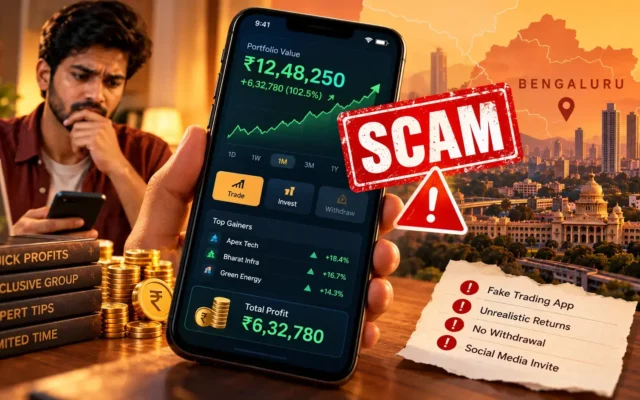
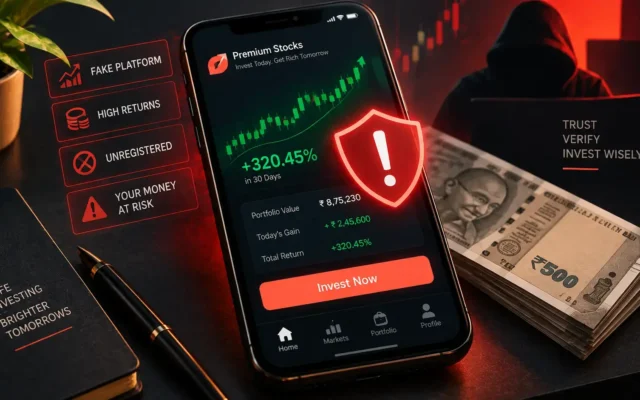
Fraudsters may contact you with claims of expert tips, exclusive trading access or unusually strong returns. They can steer you to a platform that resembles a genuine broker’s app, or to an app distributed outside an official app store. A displayed account balance may be invented; apparent gains can be a lure to prompt a bigger deposit.
Take Judith, a nurse in Tura, who sees a group message promising access to a specialist trading team. She is shown a dashboard with a rising balance after a small initial transfer. That number alone does not confirm a trade happened, and a friendly contact in the group does not verify who controls the platform. This is how a trading app scam can turn a modest first payment into repeated transfers.
The withdrawal is where the pressure shows
When a victim asks to withdraw, the operator may demand another payment for “tax”, account verification or unlocking funds. Treat any demand to send more money to release your own balance as a serious warning. In the reported Lucknow case, the precise demands have not been established here; do not assume a particular method or payment trail.
Mathew, a shop owner in Pathanamthitta, notices that the app’s support team keeps postponing a withdrawal and asks him to pay an additional charge to proceed. The practical question is not whether the displayed profit looks plausible. It is whether the platform and the people requesting money can be independently verified. A trading app scam thrives when urgency replaces that check.

How to Protect Yourself
Verify the platform before sending money
- Check the broker or intermediary through SEBI’s official resources. Do not rely on a registration number, logo or link supplied by the person pitching the app; look up the details independently.
- Download apps only through trusted official app stores, and verify the developer and official website. A familiar name or copied logo is not authentication.
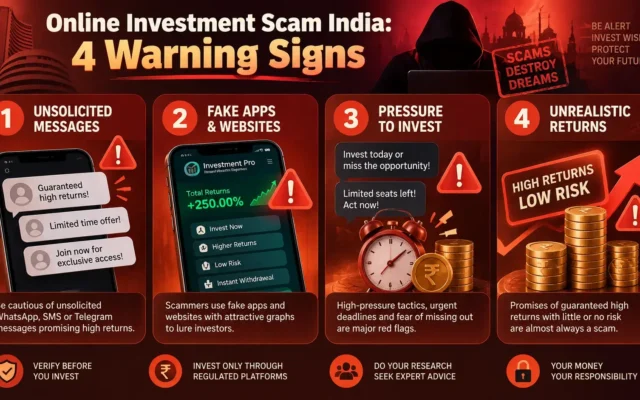
- Be wary of guaranteed-sounding profit claims, private “VIP” groups, pressure to act quickly, and instructions to transfer money to personal or unrelated accounts. These are red flags, not proof of a legitimate opportunity.
- Never share OTPs, passwords, screen access or remote-control access with someone claiming to help you trade or withdraw funds.
If you have already paid, preserve evidence
Stop engaging with the caller or group and do not pay a second amount to “recover” the first. Save chats, phone numbers, app links, screenshots, bank or UPI transaction records and timestamps. Contact your bank or payment provider promptly through its official channel, and report the incident through India’s official cybercrime reporting channels. If you are unsure what to report, check current instructions on official government and police websites.
Zeenat, an accounts assistant in Jammu, finds that a platform she used will not process her withdrawal. Keeping the messages and transaction references gives her a clear record to share when contacting her bank and reporting the suspected fraud. A trading app scam can be stressful and embarrassing; the priority is preserving evidence and reporting quickly, not blaming yourself.
For more scam alerts and practical checks, the ScamShield hub covers fraud awareness. You can also read Online Investment Scams in India: Warning Signs, Real Cases and What to Do (2026) for broader warning signals. The RBI and SEBI publish official information; use their verified channels rather than links sent by an unknown contact.
Final Thoughts
The reported ₹3.52 crore loss in Lucknow is a blunt reminder: an app balance is not proof that an investment exists, and a demand for extra money to release funds deserves immediate suspicion. Verify the intermediary independently before transferring anything.
If you suspect a trading app scam, preserve the evidence, contact your bank through official channels and report it promptly. Do not let promises of recovery pull you into another payment.

This article is for awareness only. If you believe you have been targeted or have lost money to a scam, stop all further payments immediately, contact your bank, and report it to the National Cyber Crime Reporting Portal (cybercrime.gov.in) or call 1930.
One Email a Week. Five Things Worth Knowing.
- One important financial change that actually affects you
- One practical money lesson
- One useful calculator
- One common mistake to avoid
- One guide worth reading