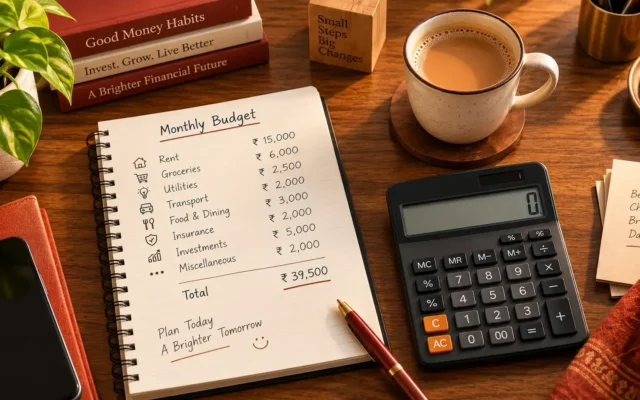

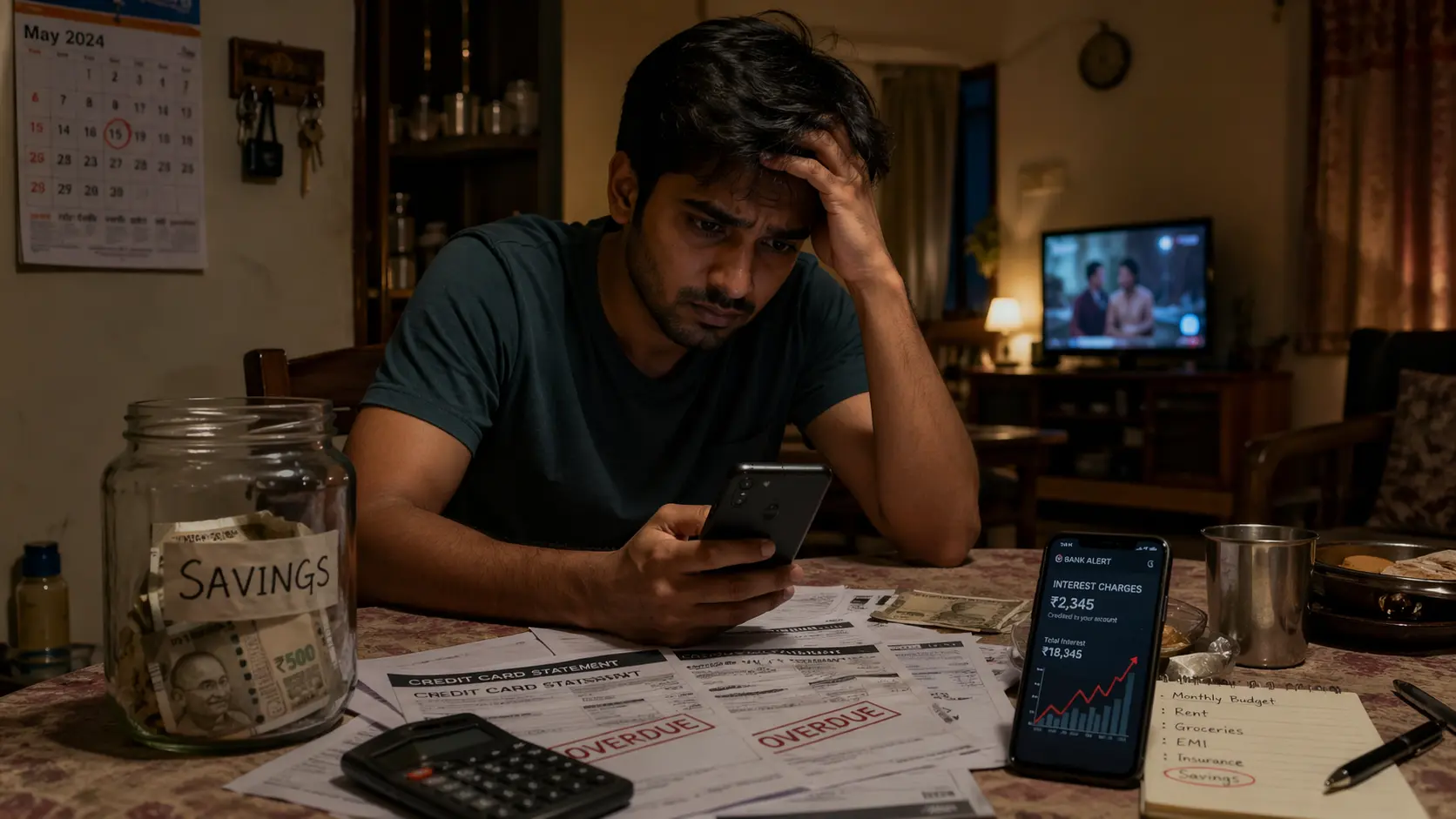
Emergency Fund vs Debt: Step-by-Step Plan for Indians (2026)
Introduction
For readers searching for this topic, the key point is if you’re stuck choosing between saving an emergency fund vs debt — here’s the truth.:
You should NOT blindly do one first. You need a strategy.
Most Indians get this wrong. They either:
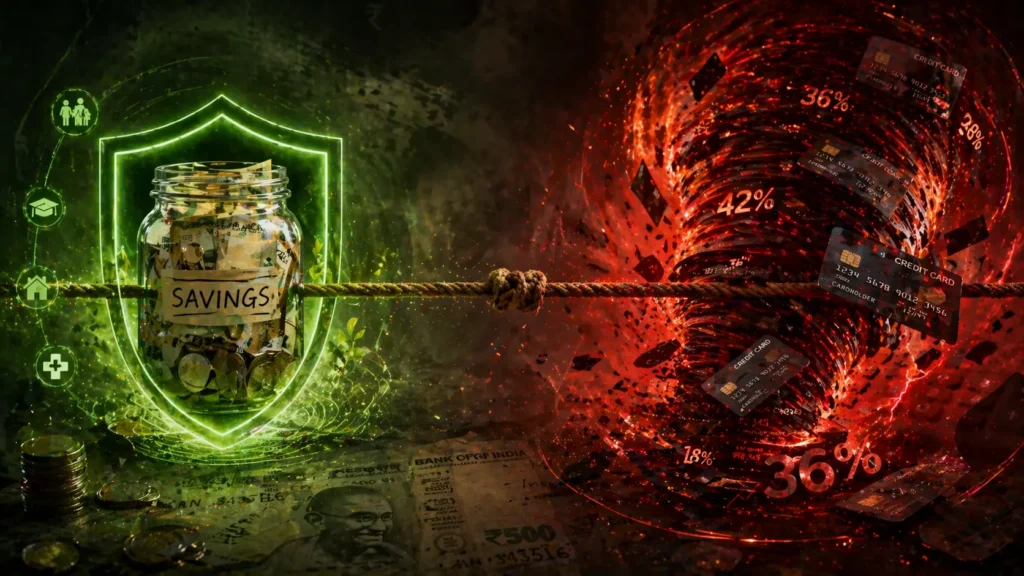
- Save aggressively while drowning in 36% credit card interest
- OR repay loans fully and then panic during emergencies
Both approaches can quietly destroy your finances.
This guide will show you:
- Exactly what to prioritize first (step-by-step)
- How to balance emergency fund vs debt in India
- Real examples with Rs. calculations
- And the mistakes that are costing people lakhs
Let’s get uncomfortable for a minute.
If you’re paying high-interest debt and still ordering Rs. 500 Zomato dinners three times a week — you’re not “managing finances.”
You’re leaking money.
Key Takeaways Box
- You need BOTH emergency fund and debt repayment — but in the right order
- High-interest debt (credit cards, personal loans) must be attacked first
- Minimum emergency fund = 1–2 months expenses initially
- Ideal full emergency fund = 6 months expenses
- Ignoring emergencies leads to more debt traps
- Discipline matters more than income
Table of Contents
Why This Confusion Exists
Most financial advice online is imported from the US.
India is different.
- We have higher personal loan interest rates
- Less social safety net
- Heavy reliance on EMIs
- Cultural pressure to “manage everything”
So when advice says:
“Save 6 months emergency fund first”
It ignores one reality:
Your credit card is charging 30–42% interest.
That’s not a suggestion. That’s a financial fire.
The Real Problem: Cash Flow vs Interest
Here’s the real battle:
- Emergency fund = protection
- Debt repayment = damage control
You need both.
But timing matters.
Step-by-Step Plan (Emergency Fund vs Debt India)
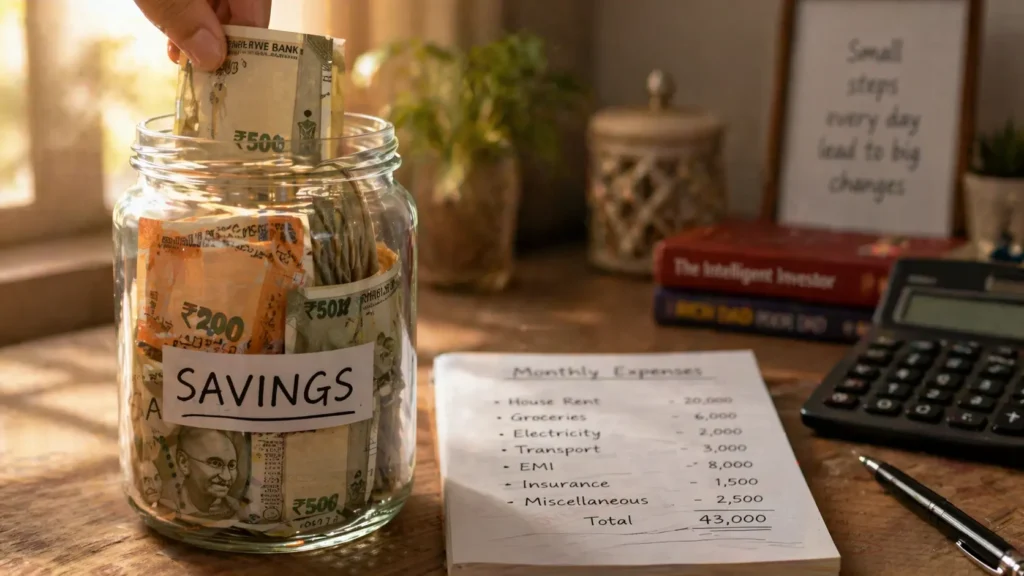
Step 1: Build a Mini Emergency Fund (₹25K–₹1 Lakh)
Before attacking debt fully:
Create a small buffer.
Why?
Because without it:
- One medical bill = new loan
- One job loss = credit card spiral
Example:
Priya (salary: ₹40,000/month)
Monthly expenses: ₹30,000
First goal: ₹60,000 emergency fund (2 months)
Not ₹3 lakh. Not ₹5 lakh.
Start small.
Step 2: Attack High-Interest Debt Aggressively
Now comes the uncomfortable part.
If you have:
- Credit card dues
- Personal loans
These are your enemies.
Let’s be blunt:
If your debt interest > 12%
It’s urgent.

Explore Debt Snowball vs Avalanche: Which Payoff Method Actually Works Better.
Step 3: Pay Minimum on Low-Interest Loans
Home loan? Education loan?
Don’t panic.
Focus energy where it matters.
Real Rs. Calculation (This Will Hit Hard)
Let’s take Ravi.
- Credit card debt: ₹1,00,000
- Interest: 36% annually (~3% monthly)
If Ravi pays only minimum:
After 1 year → ₹1,36,000+
Now imagine:
Instead of clearing debt, he saves ₹10,000/month.
He feels good.
But mathematically?
He’s losing.
Scenario Comparison
| Action | Result After 12 Months |
|---|---|
| Save ₹10K/month | ₹1,20,000 saved |
| Ignore debt | ₹36,000 interest paid |
Net loss: ₹36,000
This is why blind saving is dangerous.
Common Mistakes Indians Make
1. “Saving feels safe, debt feels stressful”
So they ignore debt.
Big mistake.
2. EMI Lifestyle Trap
Mahesh earns ₹70,000/month:
- ₹18K bike EMI
- ₹12K personal loan EMI
- ₹8K credit card minimum
Left with almost nothing.
Still goes on trips.
This is not lifestyle.
This is slow financial collapse.
3. No Emergency Fund at All
Then one hospital bill hits.
Guess what happens?
More loans.

Explore Get Out of Debt Fast India: Step-by-Step Plan 2026.
Before vs After Transformation
Before (Typical Case)
Amit:
- Salary: ₹50,000
- Debt: ₹2 lakh
- Savings: ₹0
Result:
- Stress
- Late payments
- Low CIBIL score
- Constant anxiety
After (Following Plan)
- Built ₹75,000 emergency fund
- Paid off credit cards in 10 months
- Started SIP ₹5,000
Result:
- Stability
- Control
- Confidence

Timeline Strategy (What to Do First)
Month 1–3
- Build mini emergency fund
Month 3–12
- Aggressively clear high-interest debt
Month 12–18
- Expand emergency fund to 6 months
After 18 months
- Start investing seriously
The Hard Truth
If you’re:
- Carrying credit card debt
- Ordering food 10 times a month
- Paying for subscriptions you don’t use
You don’t have a money problem.
You have a discipline problem.
And no financial plan works without fixing that.
Where RBI & System Matter
India’s financial system isn’t forgiving.
- Interest rates regulated by Reserve Bank of India still allow high credit card rates
- Missed payments affect your entire financial future
This isn’t a game.
FAQ Section
1. Emergency Fund vs Debt India – what should I prioritize?
Start with a small emergency fund, then aggressively pay high-interest debt.
2. How much emergency fund is enough in India?
Minimum: 2 months expenses
Ideal: 6 months expenses
3. Should I invest while having debt?
Only if debt interest is low (<10–12%). Otherwise, clear debt first.
4. Is credit card debt really that bad?
Yes. At 30–40% interest, it can double your financial problems quickly.
5. Can I skip emergency fund and focus only on debt?
No. One emergency will push you back into debt again.
Conclusion
Balancing emergency fund vs debt in India isn’t about choosing one.
It’s about sequencing.
- Build a cushion
- Kill toxic debt
- Then grow wealth
Simple.
Not easy.
But doable.
Start today — even if it’s ₹500.

This article is for educational purposes only and does not constitute financial advice. Figures, examples, and outcomes are illustrative and vary based on individual circumstances and lender policies. Always consult a certified financial advisor before making major financial decisions.
One Email a Week. Five Things Worth Knowing.
- One important financial change that actually affects you
- One practical money lesson
- One useful calculator
- One common mistake to avoid
- One guide worth reading