


Get Out of Debt Fast India: Step-by-Step Plan 2026
Struggling with loans? Learn how to get out of debt fast in India with a clear step-by-step plan you can start today.
KEY TAKEAWAYS (18 min read)
━━━━━━━━━━━━━━━━━━━━━━━━━━━━━━━━━━━━━━━━━━━━━
- You can become debt-free faster by prioritizing high-interest loans like credit cards (often 30–45% annually in India).
- Using the debt avalanche method can save you ₹50,000–₹2 lakh in interest over time compared to random repayment.
- RBI-regulated banks allow loan restructuring — but only if you act early, not after default.
- A ₹20,000/month income surplus can clear ₹3 lakh debt in ~18–24 months with disciplined execution.
- Your first step today: list all debts, interest rates, and EMIs — clarity is where recovery begins.
━━━━━━━━━━━━━━━━━━━━━━━━━━━━━━━━━━━━━━━━━━━━━
Get Out of Debt Fast in India: Step-by-Step Plan (2026)
Most people don’t realise this — debt doesn’t destroy you overnight. It drains you slowly.
One EMI here. One credit card swipe there. And suddenly, half your salary is gone before the month even begins.
If you’re feeling stuck, overwhelmed, or even a little ashamed — you’re not alone. By the end of this guide, you’ll have a clear, step-by-step plan to get out of debt fast in India, using real strategies that actually work here — not borrowed advice from the US.
As of April 2026, RBI data shows rising personal loan and credit card debt across India. The problem isn’t borrowing. It’s not having a system to get out.
Let’s fix that.
Step 1 — Face Your Debt Honestly (This Is Where Most People Avoid Reality)
Here’s the uncomfortable truth — you can’t fix what you refuse to look at.
Most people underestimate their total debt by 20–30%.
That’s dangerous.
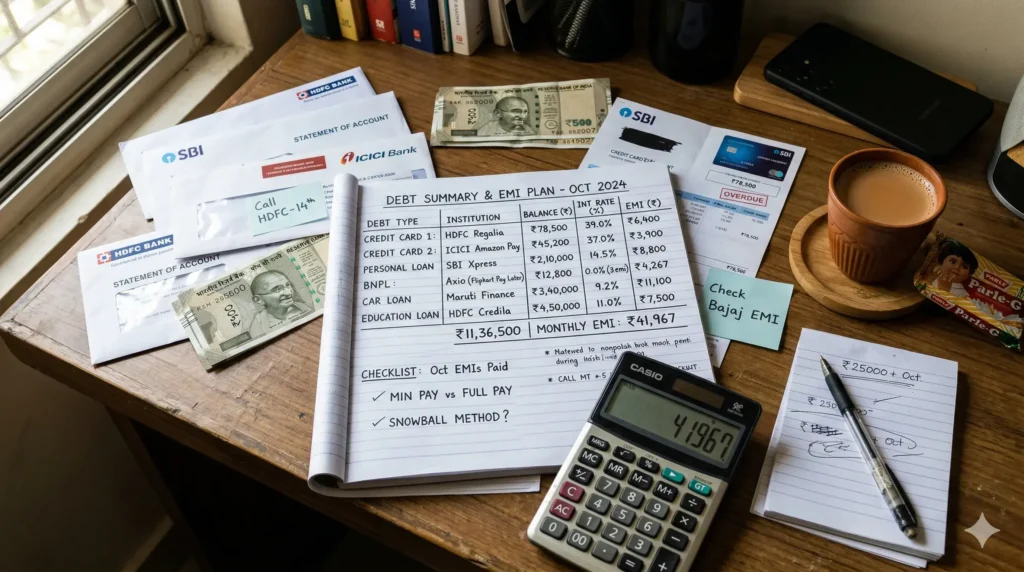
Do this today (seriously)
Write down:
- Total loan amount
- Interest rate
- EMI
- Remaining tenure
Include everything:
- Credit cards
- Personal loans
- Buy Now Pay Later (BNPL) apps
- Loans from friends/family
Example:
Awadhesh from Pune earns ₹45,000/month. He thought he had ₹1.5 lakh debt.
After listing everything? It was ₹2.3 lakh.
That gap is exactly why people stay stuck.
Short step. Big impact.
Explore India Bank Rules 2026: New RBI Changes Explained Simply to give readers the next practical step.
Step 2 — Stop Digging the Hole Deeper (Pause All New Debt)
This is non-negotiable.
You cannot get out of debt while adding new debt.
But here’s where it gets tricky.
Most people say:
“I’ll just use the credit card this month… then stop.”
That never works.
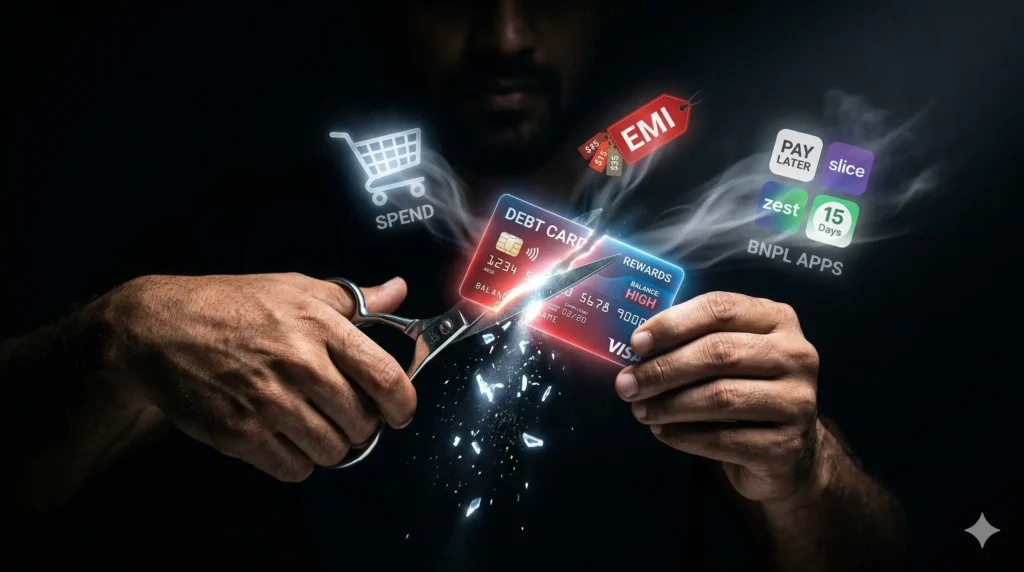
What you need to do:
- Pause all credit card usage (keep for emergencies only)
- Uninstall BNPL apps if needed
- Avoid EMI-based shopping
Real talk: If you’re buying a phone on EMI while already in debt — you’re extending your problem.
And honestly, this is where 80% of plans fail.
Explore The Debt Trap: How It Begins Quietly to give readers the next practical step.
Step 3 — Choose Your Strategy: Snowball vs Avalanche (This Changes Everything)
Now here’s the part most articles skip.

There are only two proven ways to get out of debt fast:
Debt Snowball (Psychological win)
- Pay smallest loan first
- Builds momentum
- Great if you feel overwhelmed
Debt Avalanche (Mathematical win)
- Pay highest interest first
- Saves maximum money
- Best for long-term efficiency
Example (India context):
Rebecca from Nagpur had:
- Credit card: ₹80,000 @ 36%
- Personal loan: ₹2 lakh @ 14%
If she uses avalanche:
She clears the credit card first
Result?
She saves ₹40,000+ in interest
That’s not small.
My honest advice:
If you’re disciplined → Avalanche
If you’re struggling emotionally → Snowball
Either works. Doing nothing doesn’t.
Step 4 — Increase Your EMI Without Increasing Your Salary
Sounds impossible?
It’s not.
You don’t need a higher income immediately — you need a smarter allocation.
Let me show you:
Rui from Bengaluru earns ₹60,000/month.
Before:
- ₹15,000 EMI
- ₹10,000 lifestyle spends
- ₹5,000 random expenses
After restructuring:
- ₹25,000 EMI
- ₹5,000 lifestyle
- ₹2,000 buffer
Same salary. Faster debt clearance.
Where to find extra money:
This isn’t forever.
It’s a sprint phase.

Step 5 — Tackle High-Interest Debt First (Your Biggest Enemy)
Here’s the thing — not all debt is equal.
Some debt is quietly bleeding you.
Worst offenders in India:
- Credit cards (30–45%)
- BNPL apps
- Instant personal loan apps
Compare that to:
- Home loans (~8–9%)
- Education loans (~9–11%)
Big difference.
Quick rule:
Anything above 18% interest = priority kill
Example:
₹1 lakh credit card debt @ 36%
= ₹36,000 interest/year
That’s like losing 3 months’ salary for many people.
Painful. But fixable.
Step 6 — Use Smart Hacks (Balance Transfer, Restructuring, Negotiation)
Now here’s where it gets interesting.
You don’t always have to “brute force” your way out.
Option 1: Balance Transfer
Move high-interest credit card debt to:
- Lower interest credit card
- Personal loan (~12–16%)
Option 2: Loan Restructuring
Banks (regulated by RBI) may:
- Extend tenure
- Reduce EMI temporarily
But wait — there’s a catch.
This works best before default, not after.
Option 3: Settlement (Last Resort)
If you’re severely stuck:
- Negotiate lump sum settlement
But this affects your CIBIL score.
Use only if necessary.
Step 7 — Build a Mini Emergency Fund (Yes, Even While in Debt)
I know what you’re thinking:
“Why save when I have debt?”
Fair question.
But here’s the reality — without a buffer, you’ll fall back into debt again.
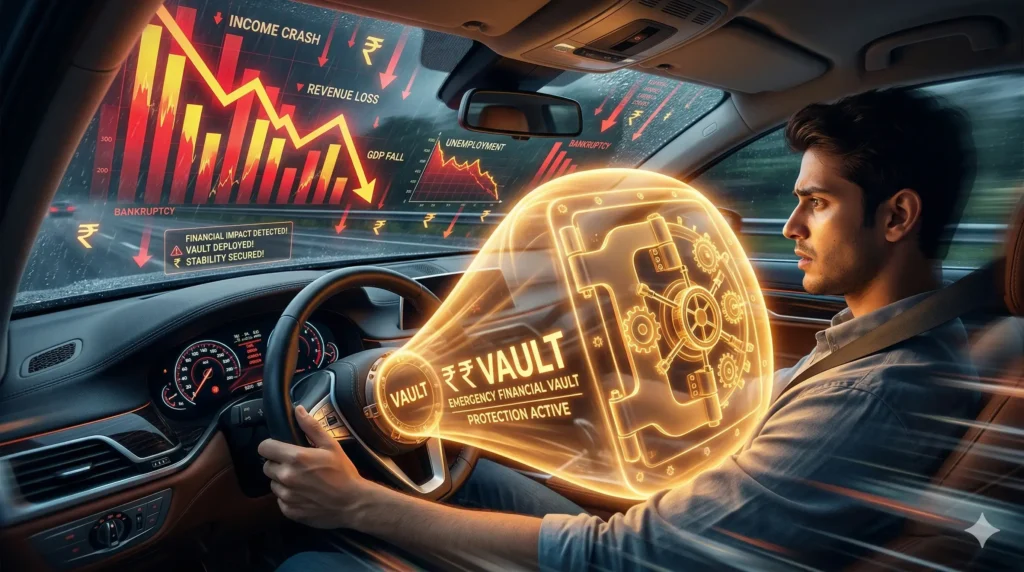
Target:
₹20,000–₹50,000 emergency fund
Keep it in:
- Savings account
- Liquid mutual fund
Think of it as a financial airbag.
You hope you don’t need it.
But you’ll be glad it’s there.
Step 8 — Track Progress Like a Scoreboard (Motivation Matters)
Debt repayment is not just math.
It’s behavior.
And behavior needs feedback.
Simple system:
- Track monthly outstanding balance
- Celebrate small wins
- Visual progress (Excel or app)
Example:
Month 1: ₹3,00,000
Month 6: ₹2,10,000
That drop? That’s fuel.
And honestly — this is what keeps you going.
What Happens If Markets Crash or Income Drops? (Real Risk Scenario)
Let’s be realistic.
Life doesn’t go as planned.
If your income drops or expenses rise:
- Your repayment timeline may extend
- You might feel tempted to borrow again
Scenario:
If you’re repaying ₹3 lakh debt and lose your job:
Without emergency fund → more debt
With emergency fund → survival cushion
This is why Step 7 matters more than it looks.
When Motivation Dips: Months 4 to 6
Most payoff plans stall in the middle, not at the start. By months 4 to 6 the balance still looks huge and your effort feels invisible. Three habits help you push through:
- Track progress weekly, not monthly
- Treat every ₹10,000 paid as a win
- Do not let a pay raise turn into new lifestyle spending
Swap, Do Not Just Cut: A Simple Trade-Off System
Here’s a simple shift that changes everything.
Instead of cutting — swap.

Examples:
| Expensive Habit | Smarter Alternative | Monthly Savings |
|---|---|---|
| ₹3,000 weekend dining | ₹1,200 home outings | ₹1,800 |
| ₹1,500 subscriptions | ₹500 shared plans | ₹1,000 |
| Daily ₹200 coffee | ₹50 homemade | ₹4,500 |
That’s ₹7,000+/month saved.
Without feeling miserable.
This is the part that changes everything.
You’re not restricting your life.
You’re redesigning it.
What a ₹10 Lakh Debt Payoff Looks Like
Assume a ₹10 lakh balance at a blended 14% a year, charged monthly on the reducing balance. Paying ₹25,000 every month clears it in about 55 months (4 years 7 months) and costs roughly ₹3,55,000 in interest. Raising the payment to ₹30,000 clears it in about 43 months (3 years 7 months) and cuts the interest to roughly ₹2,74,000. Your own rates and EMIs will differ, so run your numbers in the Debt Freedom Calculator.
Your 30-Day Debt Reset
For the next 30 days:
- No impulse shopping
- No unnecessary food delivery
- No gadget upgrades
- No “small reward” spending
- Track every UPI transaction
You do not need perfection. You need awareness, and that alone changes behaviour. If budgeting is not enough, a temporary income boost helps: freelancing, tuition, weekend consulting, content writing, design, video editing or selling unused items online.
Automate the Payments
- Auto-debit
- Standing instructions
- Salary-account EMI deduction
- Credit card auto-pay
The less emotional decision-making involved, the safer your repayment system becomes.
Your Next Step (Do This in the Next 24 Hours)
No overthinking.
Here’s your action plan:
- List all debts (amount + interest)
- Pick avalanche or snowball
- Increase EMI by even ₹2,000
- Pause all new debt
- Start a ₹20,000 emergency fund
That’s it.
Small steps. Real progress.
And if you’re serious about long-term wealth after this — your next read should be:
our guide to building your first ₹1 crore through SIP investing
Now tell me — what’s your total debt number today?
Related reading: how credit counselling works in India.
Rules that work in your favour when you repay
- Prepayment charges. The RBI’s Pre-payment Charges Directions, which took effect on 1 January 2026, bar lenders from charging prepayment or foreclosure fees on floating-rate loans taken by individuals for non-business purposes. Reports say this applies to loans sanctioned or renewed on or after that date, and fixed-rate loans are not covered, so check your loan agreement.
- Balance transfers. The same directions reportedly cover moving a loan to another lender, which makes a cheaper loan easier to switch to.
- Recovery conduct. Recovery agents of banks and NBFCs may not intimidate you or call before 8 am or after 7 pm. See our guide to recovery harassment.
- Complaints. If a lender does not fix a problem within 30 days, you can complain through the RBI complaint portal or call 14448.
- Credit card interest. The RBI does not cap credit card interest rates, so card debt is usually the most expensive debt you have. Compare the annual percentage rate on your statement and attack it first.
If you cannot manage your EMIs even after trying the steps above, read our guide to real debt relief options in India for free counselling, restructuring and settlement choices, and the warning signs of a debt relief scam before paying anyone.
Frequently Asked Questions
u003cstrongu003eHow fast can I realistically get out of debt in India?u003c/strongu003e
It depends on your income and debt size. For example, ₹3 lakh debt with ₹15,000 monthly repayment can be cleared in ~24 months. Increasing EMI or using the avalanche method can reduce this to 18 months.
u003cstrongu003eShould I close my credit cards completely?u003c/strongu003e
Not necessarily. You can keep one card for emergencies, but avoid regular usage until you’re debt-free. Closing cards may also affect your credit history length, which impacts your CIBIL score.
u003cstrongu003eIs debt consolidation a good idea in India?u003c/strongu003e
Yes, if it reduces your interest rate. For example, converting 36% credit card debt into a 14% personal loan can significantly reduce your repayment burden. Always compare total cost before switching.
u003cstrongu003eWhat is the best method — snowball or avalanche?u003c/strongu003e
Avalanche saves more money because it targets high-interest loans first. Snowball works better psychologically if you need quick wins. Choose based on your discipline and motivation level.
u003cstrongu003eCan I invest while repaying debt?u003c/strongu003e
If your debt interest is above 12–15%, focus on clearing it first. Investing while paying 30% credit card interest rarely makes sense. Start investing after high-interest debt is cleared.
About the Author
Mahesh is the voice behind Investing Lens, simplifying complex financial concepts into actionable strategies for Indian investors. He focuses on practical wealth-building, smart investing, and debt-free living tailored for real-world success.
⚠️ Disclaimer: This article is for educational purposes only and does not constitute financial advice. Please consult a SEBI-registered financial advisor before making any investment decisions. Markets carry risk — past returns do not guarantee future performance.
The examples above are simplified, and their figures are assumptions used to show how the numbers work.
Not Sure What to Do Next?
Every situation is different. Get a short list of guides and calculators for debt, in a sensible order, with no sign-up. It is for learning, not personal advice.

This article is for educational purposes only and does not constitute financial advice. Figures, examples, and outcomes are illustrative and vary based on individual circumstances and lender policies. Always consult a certified financial advisor before making major financial decisions.
One Email a Week. Five Things Worth Knowing.
- One important financial change that actually affects you
- One practical money lesson
- One useful calculator
- One common mistake to avoid
- One guide worth reading