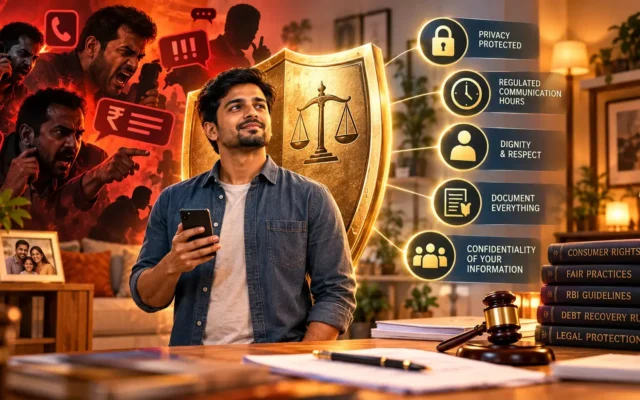


RBI Loan Recovery Guidelines: 5 Real Rights You Have Against Harassment
You missed a personal loan EMI last week because of an emergency room visit. By Tuesday morning, your phone is ringing off the hook. By Thursday, a private number is calling your office reception, or a firm voice is threatening to drop by your home at 9:00 PM. It starts with a knot in your stomach every time your phone buzzes, and ends with a feeling of complete powerlessness.
The financial pressure is real, but the psychological warfare used by aggressive collection agencies is unacceptable. Lenders often rely on your lack of information. They assume you do not know the boundary between a lawful payment reminder and illegal intimidation. The reality is brutal: many recovery agents rely on fear to bypass statutory rules.
There are strict regulatory rules governing how banks and NBFCs collect their dues. The RBI loan recovery guidelines India were created specifically to protect borrowers from abuse, harassment, and privacy violations. Having unpaid dues does not strip away your basic dignity or your constitutional rights. Here is what you need to know to take back control.

Key Takeaways
- Strict Calling Hours: Recovery agents are legally allowed to contact you only between 8:00 AM and 7:00 PM. Calls outside this window violate direct regulatory mandates.
- Strict Workplace & Privacy Rules: Agents cannot contact your employer, post on your social media, or harass your friends and family members.
- Mandatory Identification: Every agent must carry a formal authorization letter from the bank and show official photo identification before speaking to you.
- Zero Physical Intimidation: Threatening behavior, abusive language, or unscheduled visits aimed at publicly shaming you are explicitly banned.
- Formal Grievance Escalate Route: If a bank ignores your complaint for 30 days, you can escalate the matter directly to the RBI Banking Ombudsman.
Understanding the Framework of RBI Loan Recovery Guidelines India
When you default on an EMI, a bank or NBFC has every legal right to seek repayment. What they do not have is a license to harass. Under the RBI loan recovery guidelines India, the Reserve Bank of India sets unambiguous boundaries for regulated entities—including public sector banks, private lenders, and NBFCs—and the third-party recovery agencies they hire.
Lenders are fully responsible for the actions of their recovery agents. A bank cannot simply outsource collection tasks to a aggressive agency and wash its hands of improper conduct. If an agent steps over the line, the primary financial institution is directly accountable for that breach.
Allowed Communication Windows and Contact Protocols
One of the most frequent violations is late-night or early-morning persistent calling. The rules regarding contact timing are very clear:
- Agents may call or visit your designated residence only between 8:00 AM and 7:00 PM.
- Calls after 7:00 PM or before 8:00 AM are prohibited unless you have explicitly requested a call at that specific time due to your work schedule.
- Agents must respect your privacy and avoid calling repeatedly in a manner that constitutes harassment.
Verification and Identity Disclosure Rules
You never have to entertain an anonymous voice making threats over the phone or a stranger standing on your doorstep. Before discussing any debt details, the individual must prove who they are and who they represent.
Under the framework of RBI loan recovery guidelines India, agents must provide an official identity card issued by the bank or agency, along with a copy of the authorization letter from the lender. If they refuse to show these documents, you have no obligation to speak with them.
What Recovery Agents Can and Cannot Do: The Boundaries
To evaluate where you stand, you need a side-by-side comparison of lawful debt recovery practices versus prohibited conduct. The table below outlines the boundaries established by regulatory frameworks.
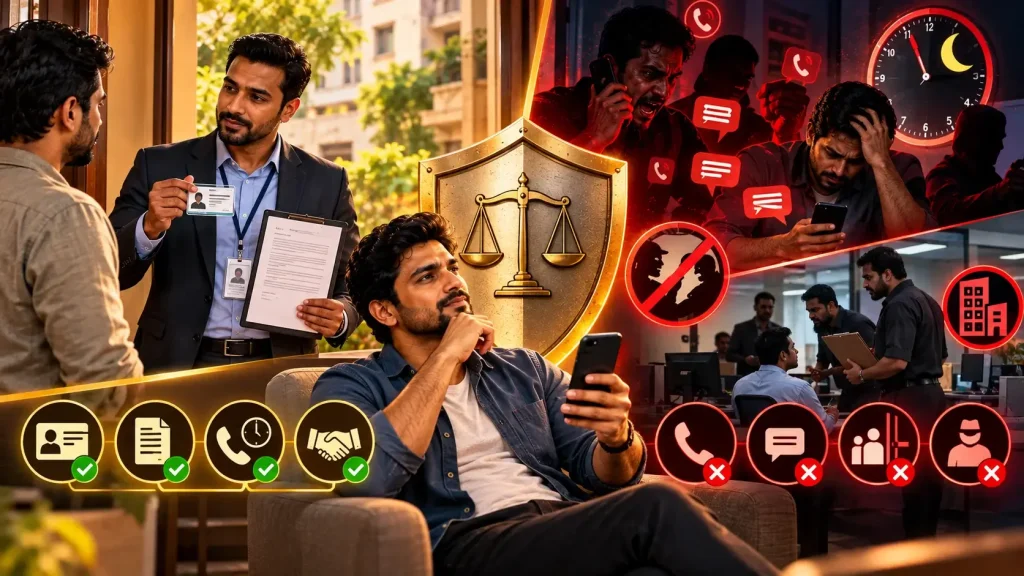
| Action Category | Permitted Conduct (What They Can Do) | Prohibited Conduct (What They Cannot Do) |
|---|---|---|
Let us look at how this plays out in a real-world scenario.
Take Rubina, a 34-year-old nurse in Lucknow, who earns ₹42,000 a month. Due to an emergency medical expense for her family, she missed two consecutive EMIs on an unsecured personal loan. Within days, a collection agency started calling her phone at 9:30 PM. When she did not answer, an agent called her hospital’s administrative department, alleging she was avoiding financial obligations.
Rubina felt publicly humiliated and panicked. However, under established regulations, contacting her employer and calling after 7:00 PM are clear violations of the rules. Rubina documented the call logs, recorded a subsequent call where the agent used aggressive language, and filed a formal written complaint with the bank’s Nodal Officer. The bank was forced to reassign her case, cease workplace contact, and offer a structured payment catch-up plan without further harassment.
Digital Loan Apps and Contact List Harassment
If you have ever used a instant loan app, you may have experienced illegal contact scraping. Illegal or unregistered lending apps often ask for wide permission access to your contacts, photos, and location during installation. When a payment is delayed, automated systems or recovery agents harvest your contacts to broadcast messages to your friends, family, and colleagues.
This conduct is strictly forbidden. Regulatory standards state clearly that lenders and their digital lending apps (DLAs) cannot access phone contacts, call logs, or private media files. Even if you checked an ‘I Agree’ box on an app, that digital consent does not override consumer protection regulations.
If an app-based agent threatens to distribute your personal details or contact people in your phone directory, remember: this is not just a regulatory violation; it enters the realm of criminal extortion and cybercrime. You can report these incidents directly on the National Cyber Crime Reporting Portal.
Evaluating Your Options: How to Handle Debt Recovery Lawfully
When you are dealing with debt recovery pressure, it helps to pause and assess your position logically. Commercial investigation of your situation requires balancing your obligations against your rights.
Pros and Cons of Direct Communication with Lenders
Many borrowers make the mistake of going completely silent when they cannot pay. While staying silent might seem like an easy short-term defense against uncomfortable conversations, it usually escalates collection efforts. Here is a balanced look at taking a proactive approach:
- Pros of Proactive Dialogue:
- It establishes that you are a genuine borrower facing short-term liquidity issues rather than a intentional defaulter.
- You may negotiate a temporary restructuring, a moratorium, or an EMI extension.
- It puts a formal communication record on file, making it harder for unauthorized recovery agents to claim you are untraceable.
- Cons and Risks to Mind:
- Promising payment dates you cannot meet will further harm your credibility with the lender.
- Written communications acknowledging debt might reset statutory limitation periods depending on the timeline.
- Accepting a short-term settlement offer without reading the fine print can severely lower your credit profile.
What to Check Before Deciding Your Next Step
Before you engage with a recovery representative or sign any debt modification agreement, systematically check these four parameters:
- Verify the exact balance: Request an official account statement from the bank. Do not accept verbally stated amounts from a field agent, as they may include unauthorized collection fees.
- Check agent credentials: Demand their ID card and the bank authorization letter. Note down their full name, agency name, and phone number.
- Review your loan agreement: Understand the penal interest clauses so you know exactly what penalties apply under your contract.
- Assess your debt profile: If you are managing multiple unsecured obligations, evaluate your overall repayment capacity using structured frameworks like those detailed in How to Budget on a Rs. 30,000 Monthly Salary in India.
Consider Mrinal, a 41-year-old school manager in Guwahati, who ran into debt consolidation trouble after taking a personal loan alongside existing credit card dues. When recovery calls began, Mrinal did not hide. He pulled his official account statement directly from the bank’s portal, matched the pending principal against the penal fees, and requested a formal meeting at the branch. By bringing a documented cash-flow plan and pointing out that an agent had called him after hours, he shifted the tone of the conversation from intimidation to a formal resolution.
Step-by-Step Guide: How to Report Harassment
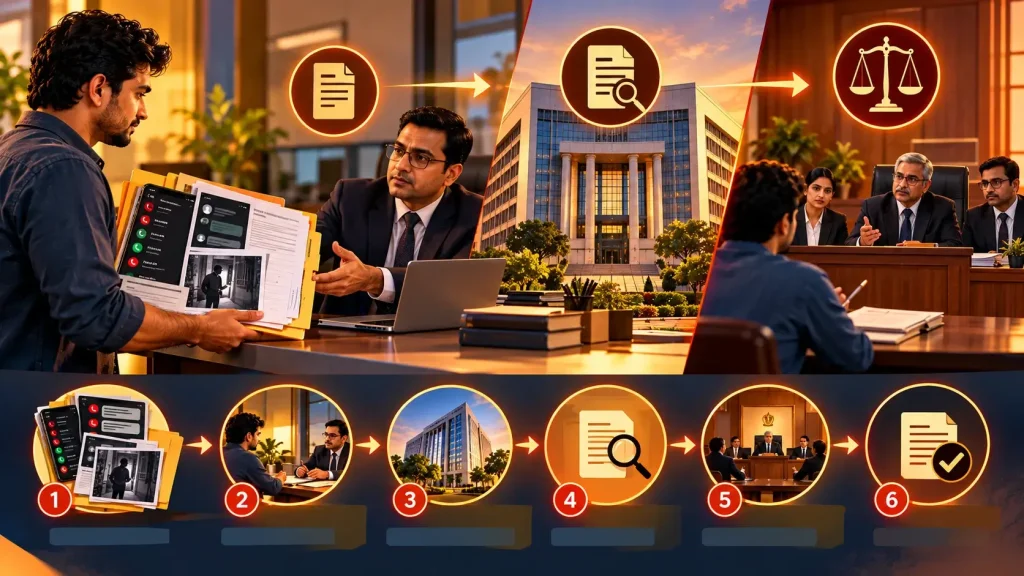
If a recovery agent violates regulatory guidelines, following a calm, step-by-step process is much more effective than getting into an argument on the phone.
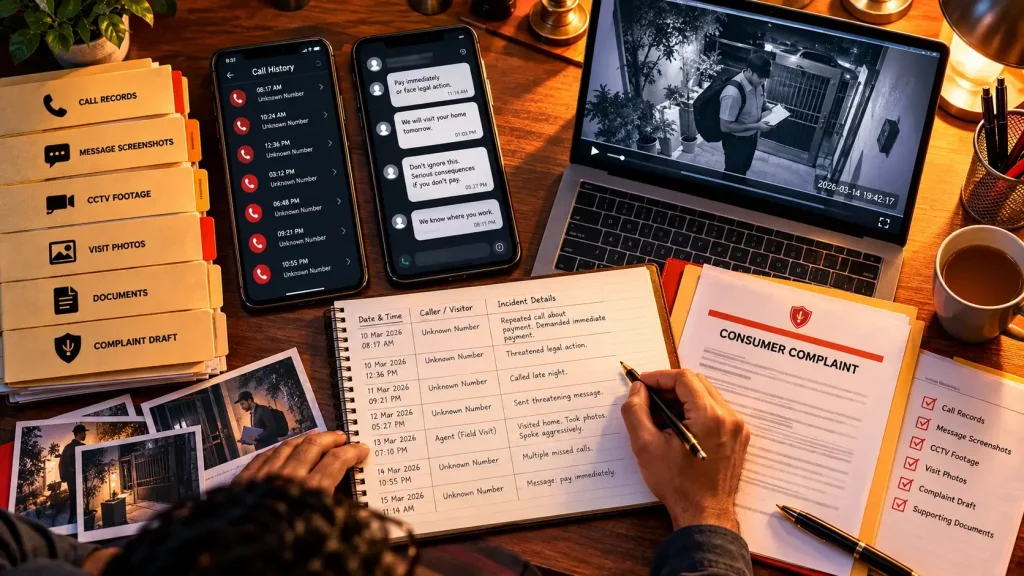
Step 1: Collect Firm Evidence
Do not rely on verbal claims. Build an evidentiary record immediately:
- Enable call recording on your phone when speaking with recovery representatives (where legally permissible).
- Take screenshots of WhatsApp messages, SMS threats, or late-night call logs displaying timestamps clearly.
- Save any security camera footage if agents visit your home and cause a public disturbance.
Step 2: Submit a Written Complaint to the Principal Nodal Officer
Bypassing standard call centers and writing directly to the bank’s Nodal Officer or Grievance Redressal Officer yields better results. Draft a concise email stating:
- Your loan account details.
- The specific violations committed (e.g., calls after 7:00 PM, abusive language, contacting third parties).
- Attached screenshots, call logs, or audio files as evidence.
- A clear request for immediate cessation of improper practices and confirmation that recovery actions will follow regulatory standards.
Step 3: Escalate to the RBI Banking Ombudsman
Under the RBI Integrated Ombudsman Scheme, if the financial institution does not resolve your grievance within 30 days, or if they reject your complaint without adequate justification, you can escalate the matter directly to the Ombudsman.
You can lodge a complaint online through the official CMS portal (cms.rbi.org.in). The RBI takes systemic breaches of collection norms seriously. Lenders face penalties and potential regulatory enforcement actions if a pattern of illegal collection practices is established.
Try it yourself: If you are currently receiving illegal calls, create a simple log spreadsheet today. Note the date, exact time, caller identity, bank represented, and the nature of the conversation. This simple record transforms vague stress into admissible documentation.
FAQs
Can recovery agents visit my home without prior notice?
Agents may visit your registered residential address, but only between 8:00 AM and 7:00 PM, and they must carry official authorization letters and bank-issued identity cards. They cannot force entry, refuse to leave, or cause a public disturbance.
What should I do if a recovery agent uses abusive language?
Immediately disconnect the call after stating that you are recording the conversation. File an official written complaint with the lender’s Principal Nodal Officer containing the audio recording or message screenshots, and escalate to the RBI Ombudsman if the bank fails to take action.
Can collection agents contact my employer or colleagues about my debt?
No. Contacting your employer, HR department, friends, or family to discuss your personal financial obligations is a direct violation of privacy protections under recovery regulations.
Will defaulting on a loan affect my credit score permanently?
A loan default will lower your CIBIL score, but it is not permanent. Once you resolve the debt through structured repayment or full settlement, your credit history can gradually rebuild over time through responsible credit usage.
Final Thoughts
Financial distress is a hard, uncomfortable experience, but it does not diminish your rights as a consumer. The RBI loan recovery guidelines India exist precisely to establish that debt collection must remain within the boundaries of law, privacy, and civil conduct. Banks have the legal right to collect what they are owed through appropriate channels, but they have no right to use intimidation, privacy violations, or fear tactics.
If you are facing pressure from aggressive collection agencies, move away from emotional arguments and start documenting everything. Verify your debt details, keep record of all interactions, and utilize formal grievance channels, up to the RBI Ombudsman, to protect yourself.
Take the next practical step: review your current loan documentation, check your latest statement of account, and read through The Phone That Would Not Stop Ringing: 7 Warning Signs of Debt Recovery Harassment in India to ensure your rights remain protected at every stage of your financial journey.
The examples above are simplified, and their figures are assumptions used to show how the numbers work.
Not Sure What to Do Next?
Every situation is different. Get a short list of guides and calculators for debt, in a sensible order, with no sign-up. It is for learning, not personal advice.

This article is for educational purposes only and does not constitute financial advice. Figures, examples, and outcomes are illustrative and vary based on individual circumstances and lender policies. Always consult a certified financial advisor before making major financial decisions.
One Email a Week. Five Things Worth Knowing.
- One important financial change that actually affects you
- One practical money lesson
- One useful calculator
- One common mistake to avoid
- One guide worth reading