

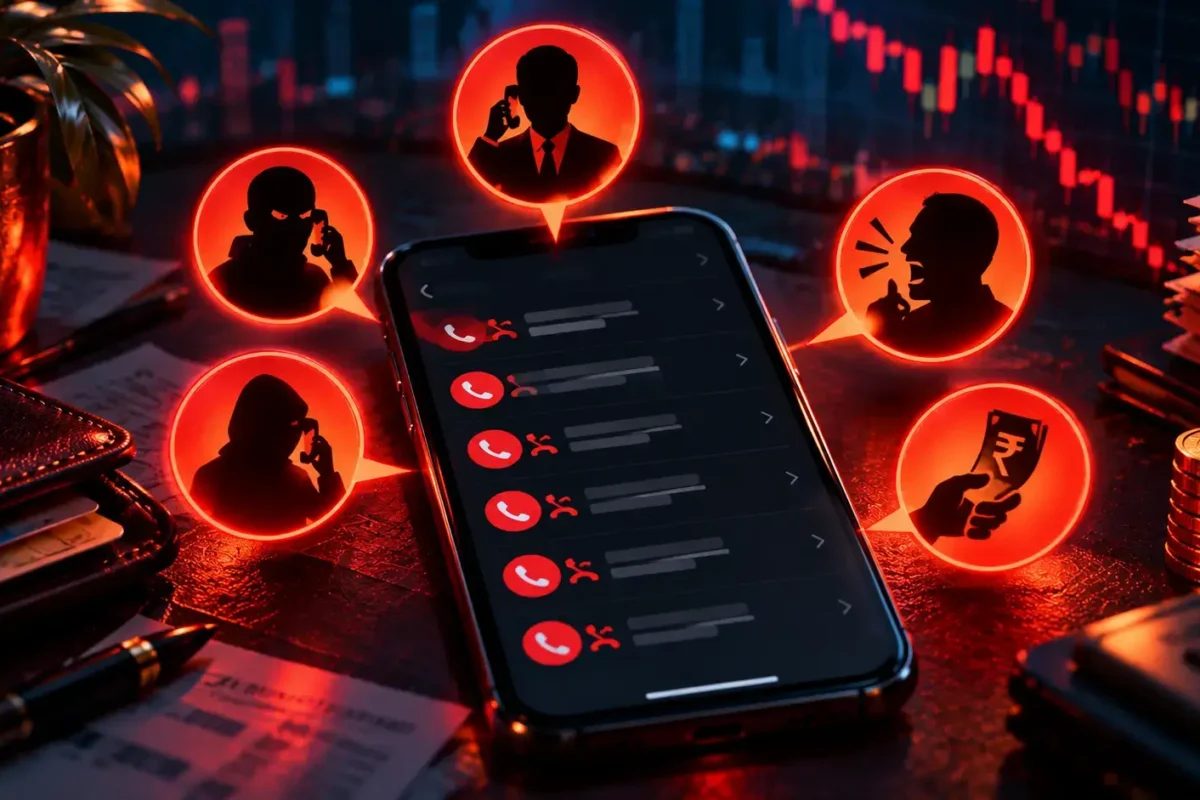
The Phone That Would Not Stop Ringing: 7 Warning Signs of Debt Recovery Harassment in India
What Is Debt Recovery Harassment?
The phone rings at 7:42 in the morning. It is not your alarm. It is not a wrong number. It is someone calling about a debt you owe — a personal loan you took two years ago, a credit card bill you have been trying to catch up on, an EMI you missed last month. By noon, it has rung twelve times. By evening, your mother has also received a call. By the next morning, your colleague at work knows about your financial trouble.
This is Debt Recovery Harassment. And it is happening to millions of Indians right now — not because they are criminals, but because they are people who fell behind on payments and are now being treated like they have no rights at all.
Debt Recovery Harassment is not just annoying — it is a systematic violation of your rights. A missed payment spirals into a full-blown psychological assault. Your phone becomes a weapon aimed at your dignity. Your family, your friends, your workplace — all dragged into a conversation you never wanted anyone else to hear.
Consider Priya, a marketing executive in Mumbai earning Rs. 12 lakh a year. She took a personal loan of Rs. 4 lakh from an NBFC to cover her mother’s medical bills. When she missed two EMIs after a job change, the recovery calls started at 7 AM and did not stop until midnight. Her neighbour received a call asking about the defaulting girl on Floor 14. Debt Recovery Harassment had turned her life into a public spectacle.
When Collection Calls Cross the Line
Debt Recovery Harassment happens when a lender or its appointed agent uses intimidation, excessive contact, or abusive tactics to pressure you into paying a debt. It is not the same as a legitimate reminder call. It is a pattern of behaviour designed to scare you into compliance — often targeting your family, your workplace, and your mental health.
Who Are These Debt Collectors Really?
Most banks and NBFCs do not collect debts themselves. They outsource the job to third-party recovery agencies — firms that earn commissions based on how much they recover. These agencies operate with minimal oversight, and their incentives are simple: call constantly, apply pressure, and get paid. The person on the other end of the line may not even know your name. They know your loan account number and your vulnerability.
The RBI Framework You Should Know About
The Reserve Bank of India has laid down a Fair Practice Code that governs how lenders and their agents must behave during recovery. According to RBI guidelines, recovery agents cannot intimidate borrowers, cannot contact you at unreasonable hours, and cannot disclose your debt details to anyone other than you or a co-applicant. Despite these rules, violations are widespread because enforcement is inconsistent and penalties are rarely enforced in practice.
7 Warning Signs of Debt Recovery Harassment
Knowing the warning signs is the first step to protecting yourself. If any of these apply to your situation, you are dealing with Debt Recovery Harassment — and you have legal recourse.
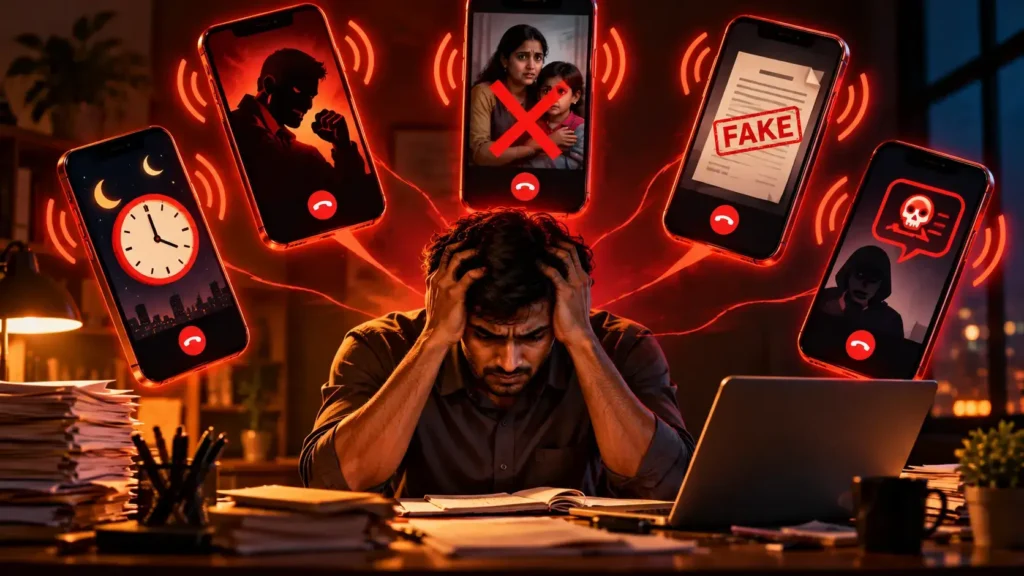
Sign 1: Calls Before 8 AM or After 7 PM
The RBI explicitly states that recovery calls outside the hours of 8 AM to 7 PM are a violation. If you are receiving calls at dawn or late at night, the collector is breaking the code. It is not a grey area. It is a rule.
Sign 2: Threats and Intimidation Tactics
Threats of physical harm, verbal abuse, or implied violence are not just unethical — they are criminal. A recovery agent who tells you they will come to your house or make sure everyone knows is operating outside the law. No legitimate lender authorises this behaviour.
Sign 3: Calling Your Workplace or Family Members
Your employer, your colleagues, your parents, your spouse — none of them are obligated to discuss your debt. If a recovery agent contacts anyone other than you or a co-borrower to discuss your loan, that is a clear violation of privacy. Priya’s neighbour receiving a call about her default was a textbook example of this violation.
Sign 4: Fake Legal Threats and Misleading Notices
Some recovery agents send documents that look like court notices but are not. They may use legal-sounding language like legal action will be initiated without any actual filing. A fake notice is not just intimidating — it is fraud. Always verify any legal document through a lawyer or the court’s official portal before reacting.
Sign 5: Excessive Daily Calls Beyond Reasonable Limits
There is no fixed number that defines excessive, but if you are receiving more than three to four calls a day from the same agency, it crosses into harassment territory. The intent is to overwhelm you into paying out of sheer exhaustion, not out of a genuine repayment plan.
Sign 6: Sharing Your Debt Details with Strangers
Your financial information is private. If a recovery agent posts your name or loan details on social media, sends messages to your contacts, or discusses your situation with neighbours or colleagues, they are violating both RBI norms and data protection principles. This kind of public shaming is one of the most damaging forms of Debt Recovery Harassment.
Sign 7: Refusing to Verify the Debt When You Ask
You have the right to ask a collector to verify the debt — the amount owed, the lender’s name, and the original loan agreement. If the agent refuses, avoids the question, or becomes aggressive when you ask for proof, that is a red flag. Legitimate collectors welcome verification because they have the paperwork.
Your Rights Under RBI Guidelines and the Law
What the RBI Says About Recovery Practices
The RBI’s Fair Practice Code requires lenders to issue a notice before initiating recovery, clearly stating the outstanding amount, the time frame, and the consequences of non-payment. Recovery agents must carry identification and are not permitted to use coercion. The code also mandates that lenders must provide a grievance redressal mechanism. If your bank or NBFC ignores your complaint about harassment, they are violating RBI norms.
Take the case of Amit, a bank employee in Pune. When his sister’s recovery agent started calling his office, he knew the rules. He cited the RBI Fair Practice Code, filed a formal complaint, and the calls stopped within a week. You have the same power.

Legal vs Illegal: A Quick Reference
| Aspect | Legal Recovery Practice | Illegal Recovery Practice |
|---|---|---|
| Call Timing | Between 8 AM and 7 PM | Before 8 AM or after 7 PM |
| Family Contact | Only co-applicant or guarantor | Calling unrelated family or neighbours |
| Communication Tone | Respectful and factual | Threats, abuse, intimidation |
| Debt Verification | Provided upon request | Refused or ignored |
| Public Disclosure | Kept confidential | Shared on social media or with strangers |
| Legal Notices | Genuine court-filed documents | Fake or misleading notices |
The SARFAESI Act and Your Protection
The Securitisation and Reconstruction of Financial Assets and Enforcement of Security Interest (SARFAESI) Act gives banks the power to recover secured loans without court intervention — but only under specific conditions and only for secured assets. It does not give lenders a free pass to harass you. If your loan is unsecured, like a personal loan or credit card debt, SARFAESI does not even apply. Understanding this distinction is critical because many recovery agents misuse the act’s name to intimidate borrowers.
Filing a Complaint: Where to Go
If Debt Recovery Harassment is happening to you, you have multiple channels. First, file a complaint with the lender’s internal grievance cell — every bank and NBFC is required to have one. If they do not respond within 30 days, escalate to the Banking Ombudsman, a RBI-initiated mechanism that handles customer complaints against banks and NBFCs. You can also file a police complaint if threats involve violence or intimidation, and approach the Consumer Forum for compensation.
Rahul, a software developer in Bengaluru, faced months of harassment from a private lender. He documented every call, filed with the Banking Ombudsman, and received compensation within 90 days. The system works — if you use it.
How to Fight Back Against Debt Recovery Harassment
Document Everything
Every call, every message, every visit — record it. Note the date, time, the agent’s name, and what was said. Save screenshots of SMS messages and emails. If a recovery agent visits your home, write down what happened immediately after. This documentation becomes your evidence if you need to file a formal complaint. Priya saved every call log and screenshot from the harassment period, and when she filed her complaint with the Banking Ombudsman, the evidence was decisive.
Send a Written Cease and Desist Notice
A cease-and-desist notice is a formal letter telling the collector to stop contacting you except through specified channels — typically written communication to your registered address. You can draft this yourself or get a lawyer to do it. Once sent, any further abusive calls become a legal liability for the collection agency. This is one of the most effective tools available to you, and it costs nothing.
Escalate to the Banking Ombudsman
The RBI’s Banking Ombudsman Scheme is a free, government-backed dispute resolution mechanism. You can file a complaint online at the RBI’s CMS portal if your bank or NBFC fails to address your harassment complaint. The Ombudsman has the authority to order the bank to compensate you, apologise, or change its recovery practices. It is one of the most powerful tools an Indian consumer has against financial misconduct.

FAQs
Is Debt Recovery Harassment illegal in India?
Yes. The RBI’s Fair Practice Code explicitly prohibits intimidation, excessive contact, and disclosure of debt details to third parties. Violations can result in penalties for the lender and recovery agent.
Can I send a cease-and-desist notice to a debt collector?
Absolutely. You have the right to demand that a collector communicate with you only through written channels. Once you send a cease-and-desist notice, any further abusive calls become legally actionable.
What should I do if a recovery agent threatens me?
Record the threat, note the agent’s details, and file a police complaint immediately. Threats of violence or intimidation are criminal offences, not collection tactics.
Does missing a loan payment mean I lose all my rights?
Not at all. Missing a payment gives the lender the right to recover the debt, but it does not strip you of your legal protections. The RBI Fair Practice Code applies regardless of your repayment status.
Where do I file a complaint against a harassing lender?
Start with the lender’s internal grievance cell, then escalate to the Banking Ombudsman via the RBI CMS portal. For criminal threats, file a police complaint as well.
Final Thoughts
Debt Recovery Harassment is not a rite of passage for borrowers who have fallen behind. It is a violation of your rights, and the law is on your side — even if it does not always feel that way. The ringing phone, the shame, the fear of everyone knowing — these are the tools collectors use because they work. They exploit your silence.
Understanding what Debt Recovery Harassment looks like, recognising the seven warning signs, and knowing your legal options transforms you from a target into an informed participant in your own financial life. You do not have to accept abuse as the cost of a missed payment. Document everything, send that notice, and escalate to the Banking Ombudsman if needed. The phone can stop ringing — but only if you decide to make it stop.
If you are dealing with debt stress, remember that the first step is always knowledge. Whether it is understanding the difference between debt settlement and debt consolidation, or learning how to budget on a tight income, the resources exist. Check out Should I Accept a Debt Settlement Offer? for guidance on negotiating with lenders, or The 50/30/20 Rule in India: How to Budget Your Salary to take control of your monthly finances. For those rebuilding after harassment, Build or Restore an Emergency Fund Without Feeling Broke in 2026 offers a practical roadmap. You are not alone, and you are not powerless. Start with the facts, and take back control.

This article is for educational purposes only and does not constitute financial advice. Figures, examples, and outcomes are illustrative and vary based on individual circumstances and lender policies. Always consult a certified financial advisor before making major financial decisions.
One Email a Week. Five Things Worth Knowing.
- One important financial change that actually affects you
- One practical money lesson
- One useful calculator
- One common mistake to avoid
- One guide worth reading