
Online Investment Scams in India: Warning Signs, Real Cases and What to Do (2026)
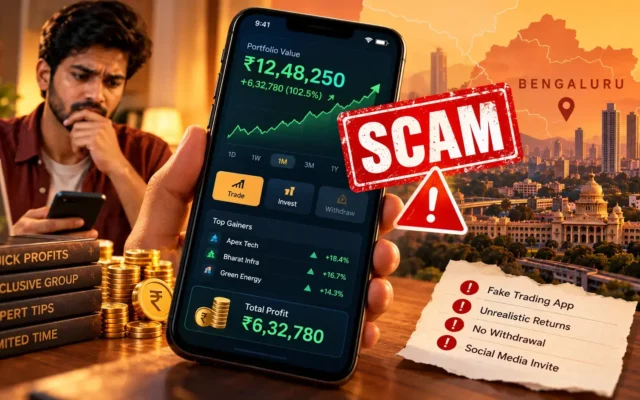
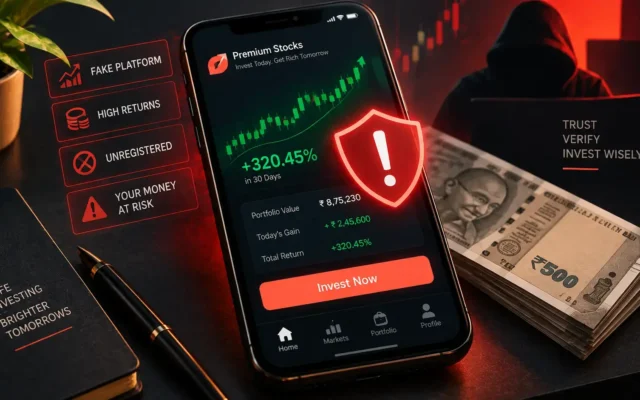
Investment fraud in India now runs through mobile apps, WhatsApp and Telegram groups, and fake “trading academies”. The pattern is almost always the same: a friendly stranger or an ad, a polished app showing quick profits, a small withdrawal that works, and then a demand for fees or “tax” when you try to take out a larger amount. This guide explains how these scams work, two recent cases reported by the press, how to check an investment before you pay, and what to do in the first hours if you have already sent money.
Last updated: October 2026. This article is educational and is not legal or financial advice. Case details come from the news reports linked below and may change as investigations continue.
How online investment scams work
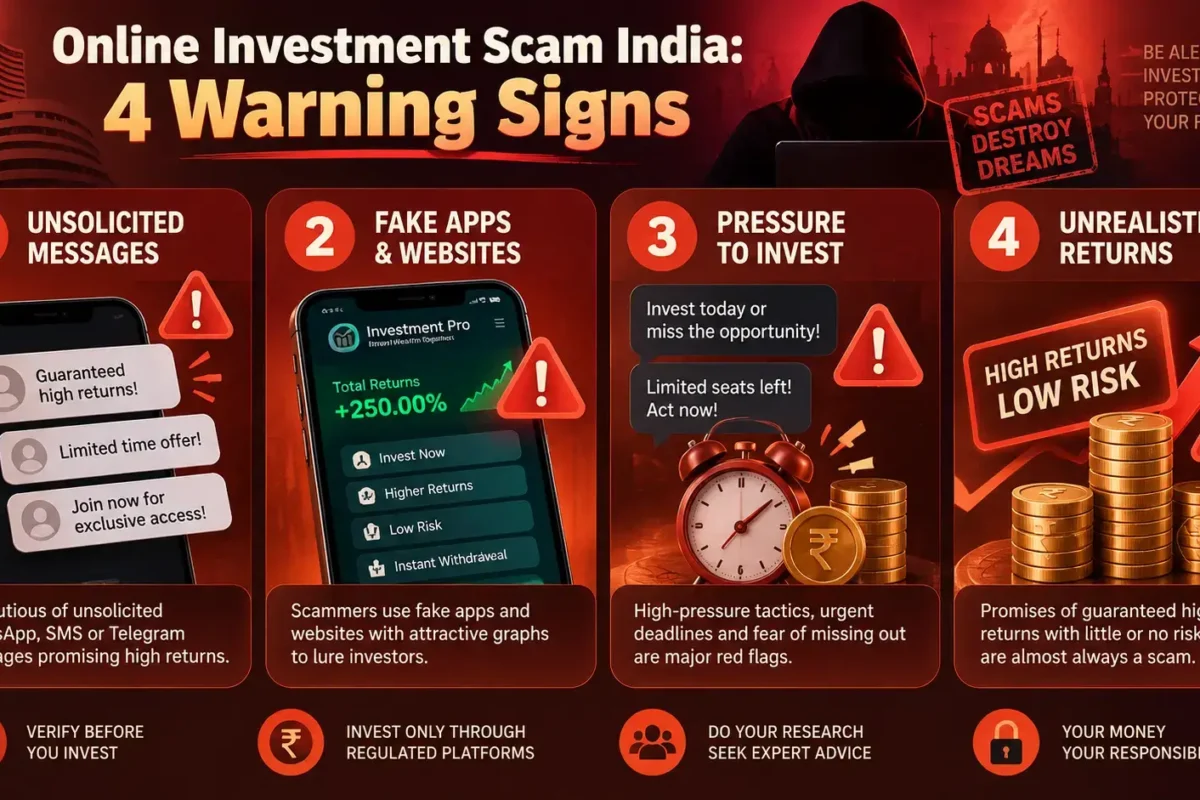
- The hook. You see an ad, a social media post or a message promising high, “guaranteed” or daily returns. Sometimes a stranger adds you to a WhatsApp or Telegram group full of members posting profits.
- The app. You are asked to download a trading or investment app, often outside the official app stores, or to open an account on a website. The dashboard shows your balance growing quickly. The numbers are not real market positions.
- The test withdrawal. A small withdrawal is allowed so you trust the platform and deposit more.
- The trap. When you try to withdraw a large amount you are told to pay a “tax”, “processing fee”, “security deposit” or to top up to a higher tier. Every payment is followed by another demand.
- The exit. The app stops working, the group goes quiet, and the money has already been moved through several accounts.
Recent cases reported in the press
We have not independently verified these cases, and investigations are ongoing, so figures differ between reports. We include them to show how large and organised these schemes can be.
SD Pay and Apna Pay, Gujarat
Amreli cyber crime police in Gujarat said they had busted a scheme involving the mobile applications SD Pay and Apna Pay, with roughly ₹634 crore in transactions and more than 1.5 lakh people reportedly lured by promises of daily returns. Other reports put the amount at ₹635 crore and the number of investors at nearly 2 lakh. See the reports from Desh Gujarat and The420.in.
Kolkata Police advisory on about 50 apps
Kolkata Police and Bidhannagar City Police issued a public warning about around 50 mobile applications that they said cybercriminals use in fraudulent online investment schemes. Police stated that the list does not mean every user of those platforms was defrauded, only that such apps are being used in scams, and urged people to be careful before sending money. See the report on IndiaBlooms.
Red flags that should make you stop
- Guaranteed, fixed or daily returns. No market-linked investment can guarantee returns.
- Pressure to act today, or a “limited slots” or “insider IPO allotment” offer.
- The person or group contacted you first, especially on WhatsApp or Telegram.
- You are asked to install an app from a link or APK file instead of the official store listing of a known broker.
- You are asked to pay into a personal account, or into a company account that does not match the broker named.
- You must pay a fee, tax or deposit to withdraw your own money.
- The platform offers forex, binary or “crypto arbitrage” trading to Indian residents. The RBI publishes an Alert List of unauthorised forex trading platforms.
- You are asked to share your screen or install a remote-access app.
How to verify an investment before you pay
- Check SEBI registration. Search the name on the SEBI website under registered intermediaries and confirm the registration number, name and website match the app or person contacting you. Brokers should also appear on the NSE or BSE lists.
- Confirm where your money goes. Pay only the broker or fund house through its official channels, and check that the bank or UPI beneficiary name matches the registered entity.
- Use the official app. Download your broker or mutual fund app only from its official website link or the verified store listing.
- Check deposit schemes. For deposit-taking or “chit” style schemes, check the RBI’s Sachet portal for state-level lists and complaints.
- Search the name with “fraud” or “complaint”, and check how old the website domain is. Very new domains are a warning sign.
- Talk to someone you trust before sending a large amount. Scammers rely on you acting alone and fast.
If you have already paid: what to do in the first 24 hours
- Call 1930 (the national cyber fraud helpline) and file a complaint at cybercrime.gov.in. Reporting quickly improves the chance that the receiving accounts can be frozen.
- Call your bank and ask them to flag the transactions, block cards or UPI if needed, and record a dispute.
- Save evidence: screenshots of chats, the app and dashboard, phone numbers, UPI IDs, bank account details and transaction IDs, before anything is deleted.
- Stop paying. Do not send any more “release” or “tax” money, however convincing the request is.
- File an FIR with your local police or cyber cell and keep the acknowledgement number.
- Secure your phone. Change banking and email passwords. If you installed a remote-access app or an APK file, remove it and consider a factory reset.
- Beware of “recovery agents”. People who contact you offering to recover lost money for a fee are usually running a second scam.
You can also report a SEBI-registered intermediary through SEBI’s SCORES complaint system. For related guidance on spotting fraud when you are already in debt, read our guide on the signs a debt relief offer is a scam and our ScamShield tool.
Frequently asked questions
Can I get my money back after an investment scam?
Recovery is not guaranteed. Police can only recover what is still traceable, which is why reporting within hours matters. Report through 1930 and cybercrime.gov.in and follow up with your bank and the police.
How do I know if a trading app is legal in India?
Look for a SEBI-registered broker with a verifiable registration number, listed on the stock exchanges, with payments made to the broker as named in the registration. If the app cannot show this, do not deposit money.
Is a profit shown in an app proof that it is real?
No. In many scams the balance shown is only a number on a screen. The only proof is whether you can withdraw your money without paying additional fees.

This article is for awareness only. If you believe you have been targeted or have lost money to a scam, stop all further payments immediately, contact your bank, and report it to the National Cyber Crime Reporting Portal (cybercrime.gov.in) or call 1930.
One Email a Week. Five Things Worth Knowing.
- One important financial change that actually affects you
- One practical money lesson
- One useful calculator
- One common mistake to avoid
- One guide worth reading