
After a Layoff, How Credit Card Borrowing Can Deepen Debt
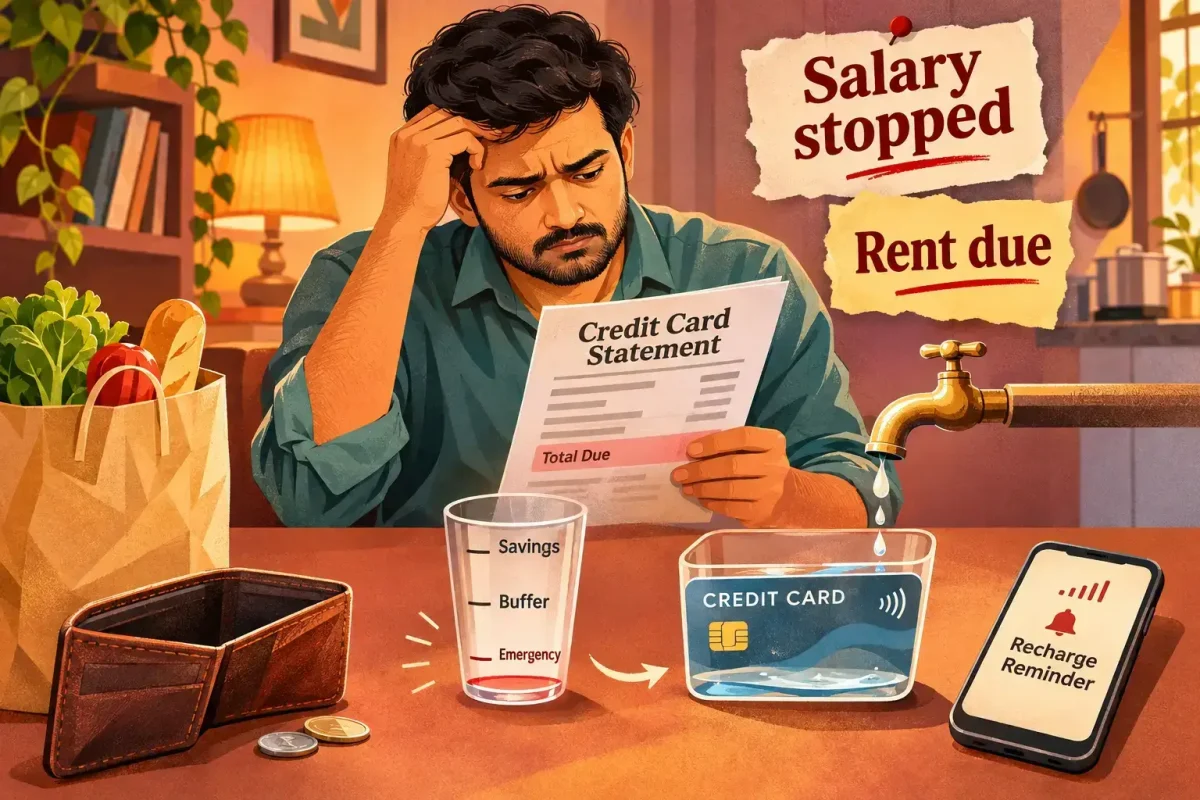
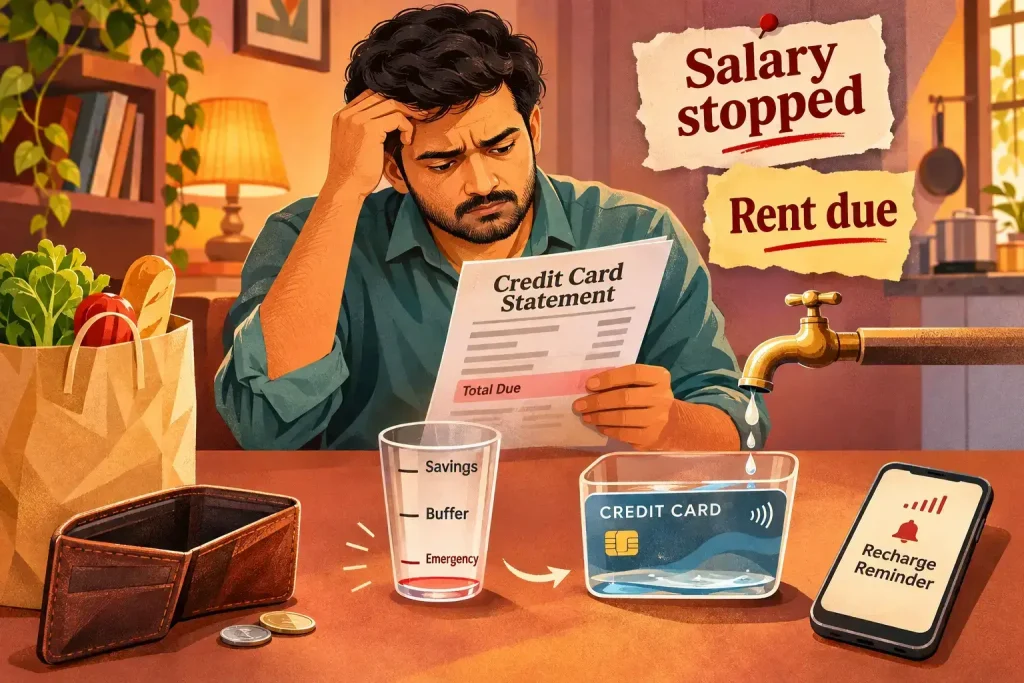
The salary stops. The rent date doesn’t move. Groceries still need paying, your phone still needs recharging, and that credit card in your wallet can make the gap feel manageable for a few weeks.
I went through a very similar situation when COVID hit hard. I lost my job, had no source of income, and couldn’t even step outside to look for work. I became heavily dependent on credit cards for everyday expenses, maxed out almost all my card limits, and faced calls and pressure while having no way to arrange the money. After months of struggle, I found another job, but almost my entire salary went towards clearing dues; I gradually cleared most of the card debt, though I still have an outstanding loan to repay.
That experience is personal, not a template for what happens to everyone. But it shows why credit card debt after job loss India is about more than interest. It can squeeze your next paycheck, your choices and your peace of mind.
This guide lays out how it works, what to check and how to make the numbers visible.
Job searches rarely go exactly as planned — here's your shortfall at three common lengths.
| Scenario | Search length | Shortfall |
|---|
Key Takeaways
- A card can bridge an immediate cash gap, but repeated spending after income stops turns next month’s bill into a second problem.
- Paying only the minimum due may keep an account from being treated as unpaid for that cycle, but it does not clear the balance; check the issuer’s current terms.
- Separate essential spending from existing card dues before estimating how much you can repay.
- Contact the issuer using verified channels and ask for the available options and their total cost in writing.
- Do not assume a balance transfer or personal loan is cheaper; compare fees, repayment period and total amount payable.
- Missed or delayed payments can affect your credit record. Check your statements and credit report rather than guessing.
Why credit card debt after job loss India can snowball
The card fills a real gap, then shifts the gap forward
Borrowing for food, transport or a medicine bill after a layoff is not automatically careless. The trouble starts when the card covers both ordinary living costs and old card dues, with no reliable income coming in to repay either.
The purchase feels handled at the checkout. The liability is still waiting on the statement.
Take Nitin, a 34-year-old nurse in Agra. Before a layoff, his monthly take-home pay was ₹40,000. While looking for work, he uses ₹12,000 on a card for groceries and basic bills, and already has ₹18,000 of older card dues.
That ₹30,000 is not one new loan with one clean repayment date. The statement, existing balance and issuer terms determine what is due and what costs may apply. This example helps examine the moving parts; it does not predict a particular bill.
A minimum payment is not a repayment plan
Minimum due can look like breathing room when cash is scarce.
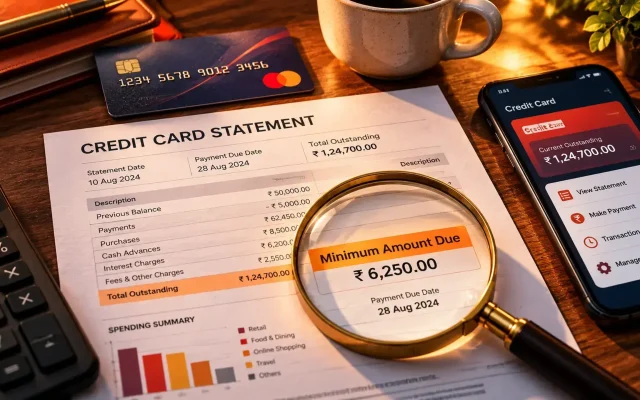
It is not the same as paying off the balance. Part of the amount remains outstanding, and fresh spending can add to it. The precise minimum, finance charges, late fees and tax treatment depend on the card’s current terms. Check the statement and official fee schedule, not an old screenshot or a friend’s rate.
Here is the blunt part: make a small payment while continuing to use the card, and the debt can stay alive far longer than the purchase itself.
A ₹20 chai is not the problem. A pattern of charging essentials without a repayment source is.
Available limit is not available income
A high credit limit can feel like a backup fund. It isn’t savings.
Use much of that limit and there is less room for a genuine emergency. A high balance relative to the limit may also be a signal worth monitoring on your credit report. No need to guess what your issuer reports: check your report and resolve errors through the appropriate channel.
Make the shortfall visible before choosing a response
Write down cash, essentials and every card balance
When money is tight, it’s easy to look only at the next minimum due. That hides the full pressure.
Put the figures together: cash available, any confirmed income, essential bills, card balances, due dates and the minimum shown on each current statement. An expected job offer or an unapproved loan is not cash in hand.
Chandrakala, a 39-year-old school administrator in Indore, has ₹15,000 available after a job loss. Her rent and household essentials for the month come to ₹11,000. She has two card statements showing balances of ₹24,000 and ₹16,000.
That leaves ₹4,000 before any other expenses. The arithmetic does not decide what she must do. It shows why treating ₹40,000 of card balances as if they can be cleared from the ₹15,000 would be misleading.
| Item in Chandrakala’s snapshot | Amount | What it tells her |
|---|---|---|
| Cash available | ₹15,000 | Money currently on hand |
| Rent and household essentials | ₹11,000 | Needs to be considered before estimating repayment capacity |
| Card balance A | ₹24,000 | Check statement, due date and charges |
| Card balance B | ₹16,000 | Check statement, due date and charges |
| Cash remaining before other expenses | ₹4,000 | Not automatically a safe repayment amount |
Try it yourself: list each amount in one place, then subtract essential costs from cash you can actually access.
The amount left is a starting point for a conversation—not proof that every rupee is available to send to a card issuer.
Check the statement, not just the app notification
For each card, note the total amount due, minimum due, payment date, current balance and any fees or charges shown. If a charge is unclear, ask the issuer to explain it. Record the date and reference number of your conversation. A call that ends with “we will see” is not a written repayment arrangement.
Try it yourself: make a one-page table with the card name, balance, due date, minimum due and issuer contact channel. Update it when a fresh statement arrives. This simple record makes it harder to confuse a payment confirmation with a cleared balance.
Talk to the issuer and compare options carefully
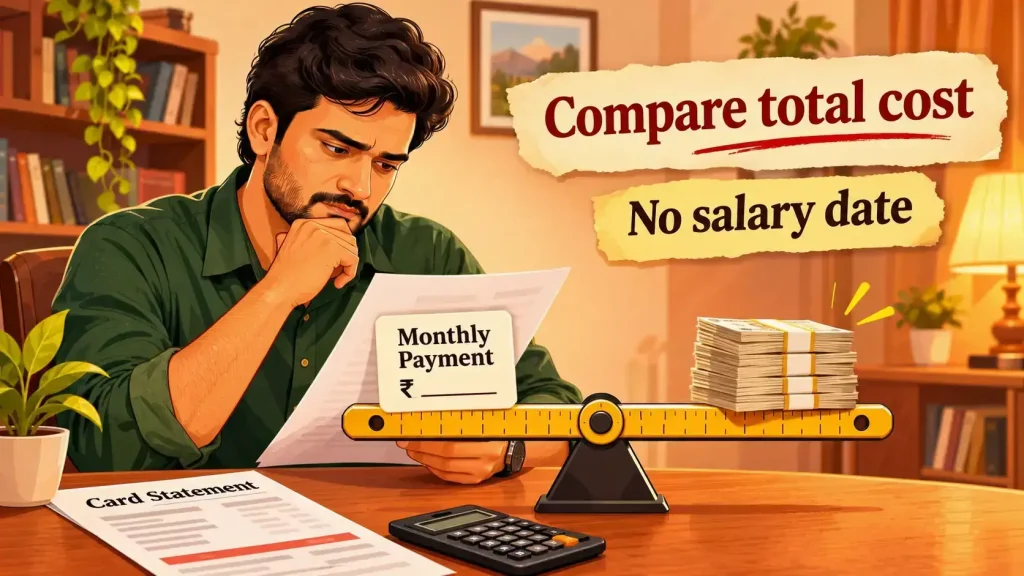
Ask what is available, and what it costs in total
Use the phone number or secure message channel on the issuer’s official website or statement. Explain plainly that your income has stopped or fallen, and ask what options, if any, the issuer can offer.
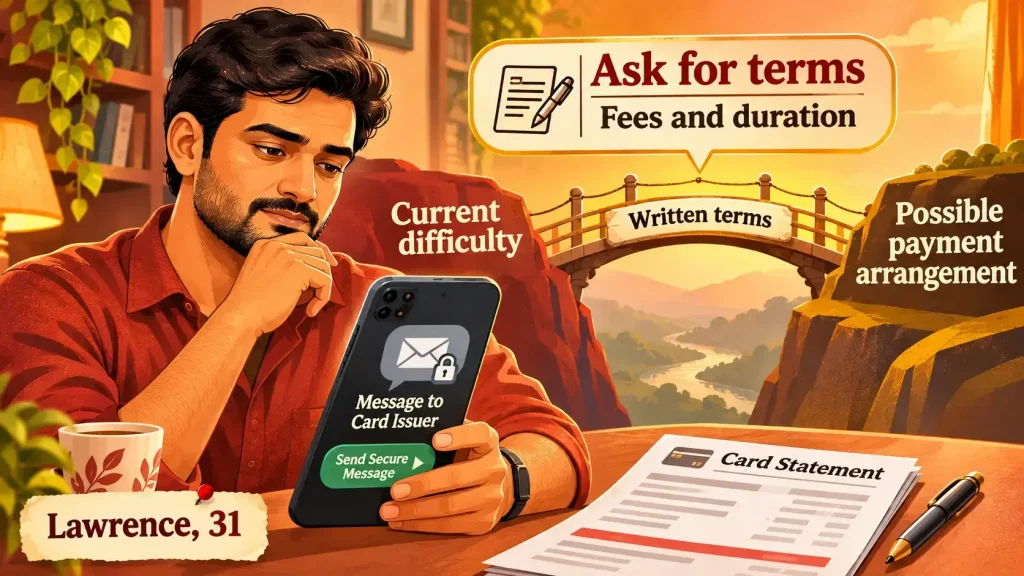
Ask for the payment amount, duration, fees, applicable charges and consequences of accepting in writing. The answer depends on the issuer and your account. There is no universal job-loss relief rule to assume applies to every card.
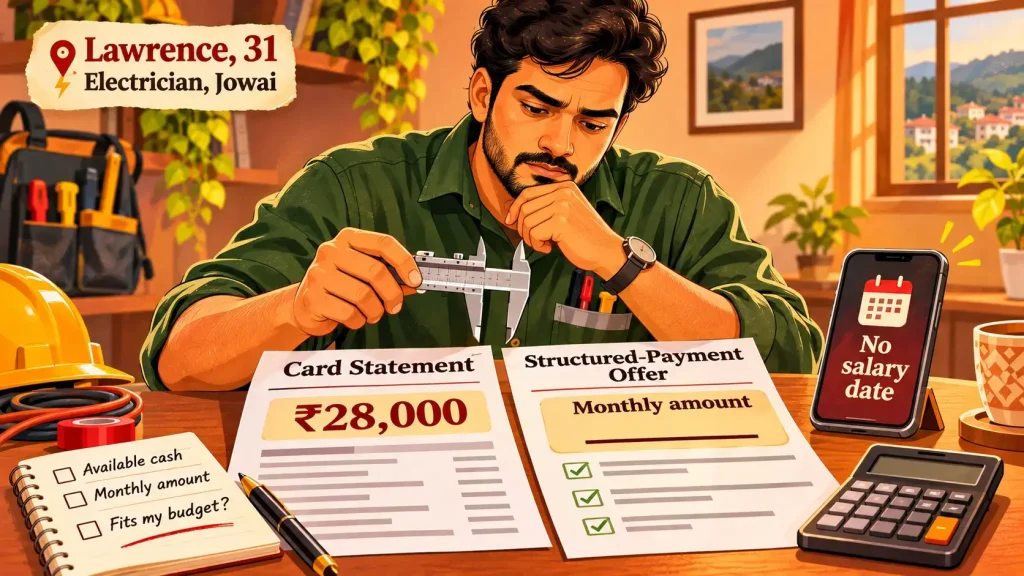
Lawrence, a 31-year-old electrician in Jowai, has ₹28,000 on a card and no confirmed salary date. He asks the issuer to explain the account’s current charges and whether a structured payment option is available.
He compares the written terms with the cash he expects to have, rather than agreeing to a monthly amount based on a job he has not yet secured. One arrangement is not guaranteed. The cost and commitment need to be clear before a decision.
Balance transfers and new loans can move debt, not erase it
A balance transfer may shift a balance to another card. A personal loan may replace revolving card debt with instalments.
Either can create a different payment structure. Neither makes the debt disappear. Processing charges, introductory periods, future rates, missed-payment consequences and the length of repayment matter. Check the current official terms; don’t rely on an advertised headline figure alone.
The question is not simply, “Is the monthly payment lower?” Ask what the total payable would be, whether new borrowing is affordable during a job search and what happens if income takes longer to return. The site’s Should I Use a Balance Transfer? addresses that decision; it is a comparison to read alongside the actual offer, not a promise that a transfer will suit your situation.
Keep records and know where to verify information
Save statements, emails, payment receipts and notes from issuer calls. If you believe a payment has not been credited or a charge is wrong, raise a complaint through the issuer’s official grievance channel and keep its reference.
RBI information can help you identify the formal complaint process applicable to regulated entities. Check the current RBI guidance for eligibility and steps.
Be wary of anyone promising to wipe out card debt for an upfront fee or asking for your OTP, PIN or full card credentials.
Financial pressure makes it easier for someone to rush you. Slow the conversation down and verify the contact independently.
If the stress is affecting sleep, concentration or physical health, that is not a character flaw.
Debt reaches beyond the statement. A qualified debt counsellor or mental-health professional may be relevant support when the situation feels unmanageable. That is not a judgment about how the debt began.
FAQs
Can I keep using my credit card after losing my job?
A card may cover an urgent expense, but every new charge adds to a balance that still needs repayment. Check the cash available and essential costs first, and do not treat the remaining credit limit as income.
Does paying only the minimum due stop credit card interest?
Not necessarily. Minimum due is not the same as clearing the outstanding balance, and charges depend on the card’s current terms; check the latest statement and issuer schedule.
Will job loss automatically lower my CIBIL score?
Job loss itself is not a payment entry, but missed or delayed repayments may affect your credit record. Check your report for the information actually recorded and raise errors through the relevant process.
Should I take a personal loan to clear card dues?
A loan may change the repayment structure, but it adds a new obligation and can involve charges and consequences if payments are missed. Compare the full written cost and repayment commitment with your realistic income outlook before making a decision.
Final Thoughts
After a layoff, the card can buy time. It cannot replace a salary.
The hardest mistake is confusing a payment that eases immediate pressure with a plan that reduces the debt. A clear list of balances, dates and essential costs gives you firmer ground than trying to hold the whole problem in your head.
Start with one practical task this week: collect the latest statements and write down the amount due, minimum due and date for every card. Then verify any proposed arrangement directly with the issuer and keep the terms in writing. The CIBIL & Credit Center is the site hub for related credit-card and credit-report topics. Worked examples in this article are illustrations, not personal financial advice.

This article is for educational purposes only and does not constitute financial advice. Figures, examples, and outcomes are illustrative and vary based on individual circumstances and lender policies. Always consult a certified financial advisor before making major financial decisions.
One Email a Week. Five Things Worth Knowing.
- One important financial change that actually affects you
- One practical money lesson
- One useful calculator
- One common mistake to avoid
- One guide worth reading