
Bengaluru Techie Duped of ₹11.65 Lakh in Fake Trading App Scam: 5 Warning Red Flags
A 32-year-old software engineer in Bengaluru was recently swindled out of ₹11.65 lakh after being lured into a fraudulent stock market investment group on WhatsApp. This devastating incident highlights the rapid surge of the fake trading app scam India has been witnessing, targeting salaried professionals with promises of institutional-grade market returns. If you receive unsolicited investment advice on social media or are asked to download a trading application outside the official Google Play Store or Apple App Store, you are the next target.
How This Fake Trading App Scam India Works
The mechanics of a fake trading app scam India are highly sophisticated, relying on psychological manipulation and realistic-looking digital interfaces. Scammers do not just steal your money instantly; they build a narrative of trust over weeks before executing the final theft.
Step 1: The Unsolicited VIP Invitation
It always starts quietly. You are added to a WhatsApp or Telegram group, often named after reputable global investment firms or domestic brokerages. In the Bengaluru case, the techie was added to a group claiming to offer exclusive insider stock tips and IPO allocations that retail investors normally cannot access. Fake accounts within the group—controlled by the scammers—constantly post screenshots of massive daily profits, thanking the “mentor” or “professor” for changing their financial lives.
Step 2: The Custom App Download
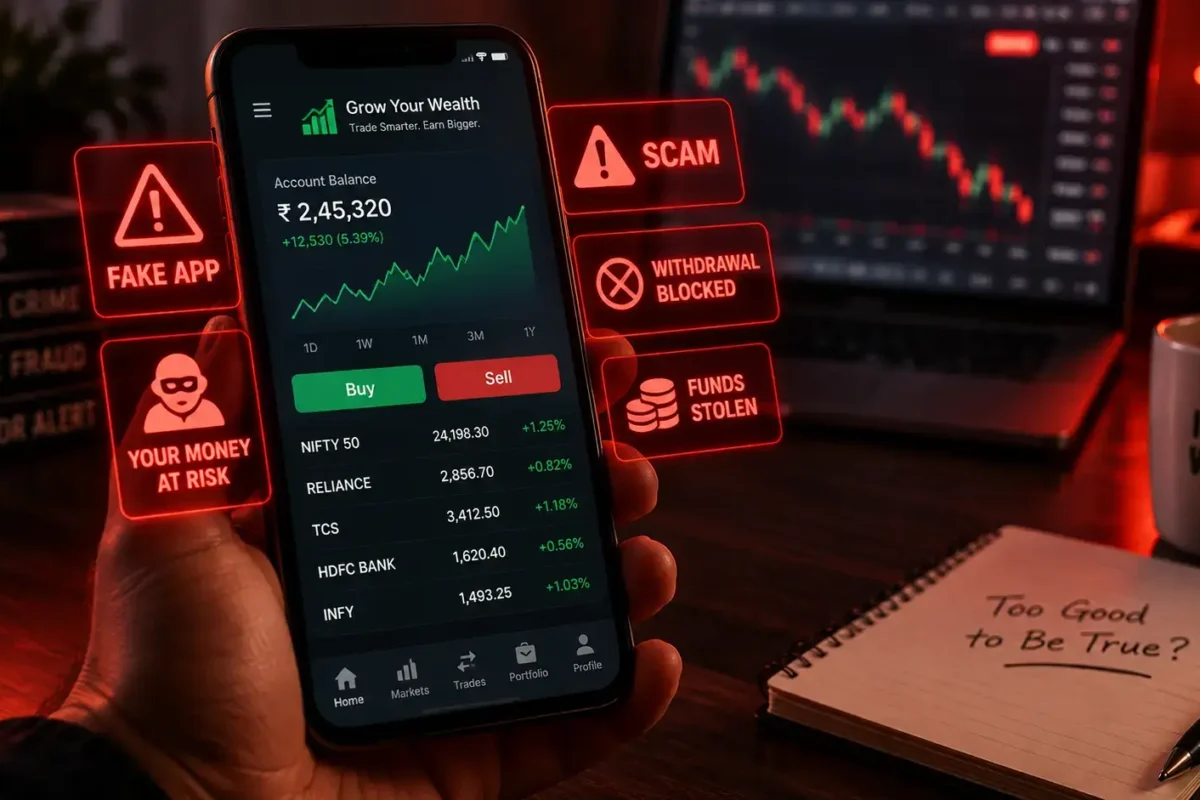
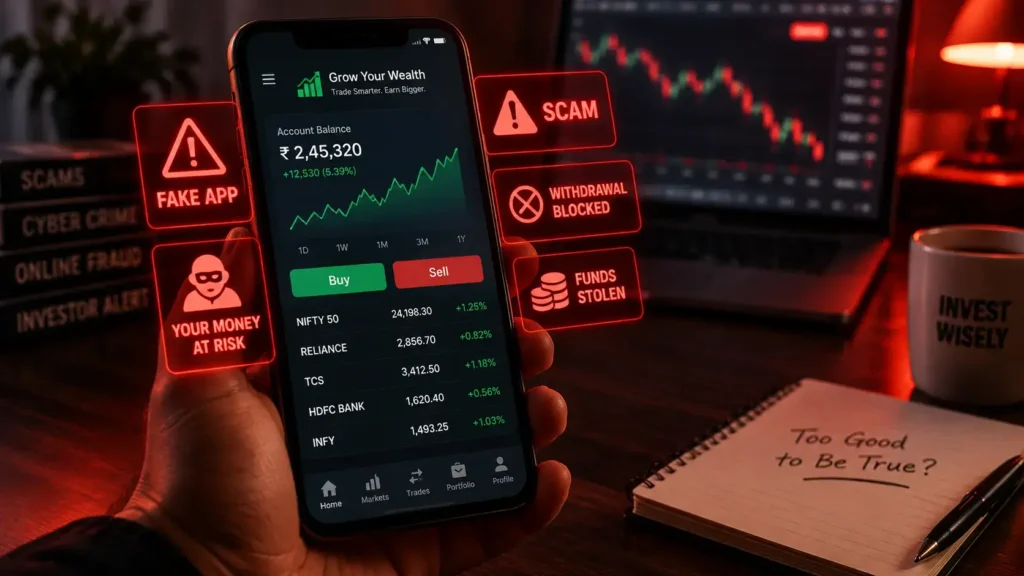
Once you show interest, the admin sends a link to download a specialized trading application. This app is never available on official app stores. Instead, they bypass security protocols by asking you to install an Android APK file or trust a custom enterprise profile on iOS. To the untrained eye, these apps look incredibly professional. They feature real-time price tickers, live charts, and a personalized dashboard showing your name and a wallet balance.
Step 3: The Illusion of Wealth
To hook you, the scammers ask for a small initial deposit, say ₹15,000. Within days, the app shows that your investment has grown to ₹25,000 due to “exclusive block deals.” The scammers even let you withdraw ₹5,000 to your actual bank account to prove the system is legitimate. Once your guard is down, they push you to invest life-altering sums.
Let us look at how this played out for the Bengaluru software engineer to understand the sheer scale of the deception:
| Phase of Deception | Victim’s Action | App Display (Fake) | Actual Financial Reality |
|---|---|---|---|
| Initial Trial | Invested ₹20,000 | Wallet shows ₹35,000 | Money transferred to mule account |
| The Big Push | Transferred ₹11.45 lakh | Wallet shows ₹45,000,000 (4.5 Crore) | Funds routed through multiple shell banks |
| The Withdrawal Request | Tried to withdraw ₹5 lakh | Error: “Pay 20% tax to release funds” | Scammer demands ₹2.3 lakh more; account locked |
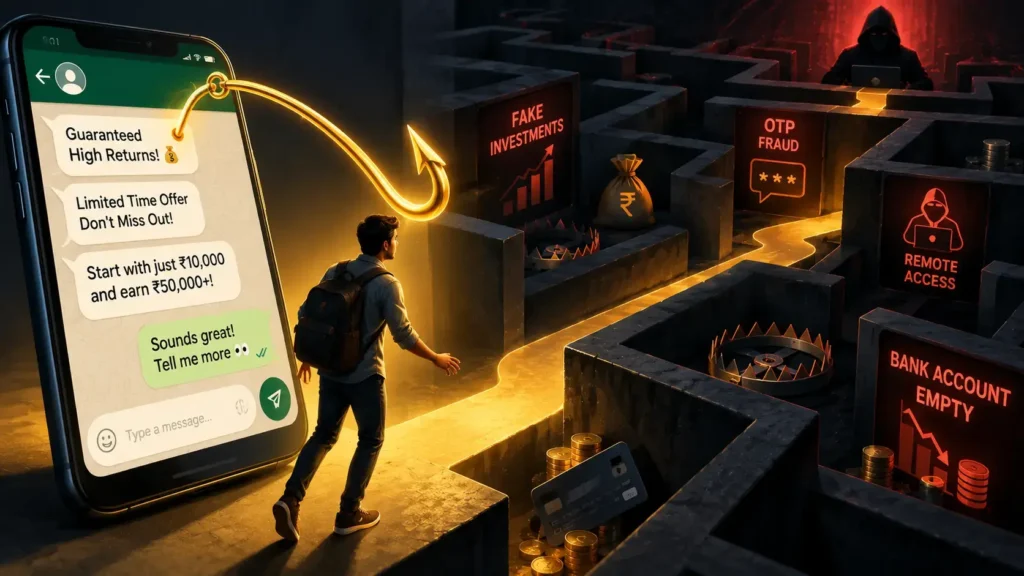
How to Protect Yourself: 5 Warning Red Flags
Protecting your hard-earned money requires absolute skepticism. The regulatory framework in India is robust, but it cannot protect you if you willingly transfer money out of your bank account to unverified entities. If you want to avoid falling victim to a fake trading app scam India, you must memorize these non-negotiable warning signs.
1. Transfers to Individual Personal Bank Accounts
When you add funds to a legitimate SEBI-registered broker like Zerodha, Groww, or ICICI Direct, the money goes to a designated corporate pool account matching the broker’s official name. In a fake trading app scam India, the scammers will instruct you to transfer money to random personal bank accounts or obscure private limited companies. They will claim these are “special institutional routing channels.” This is a lie. These are mule accounts used to launder money quickly.
2. The App is Distributed via APK Links
Never install a financial application from a direct link sent over WhatsApp, Telegram, or email. Official brokers must comply with strict security standards to list their apps on the Google Play Store or Apple App Store. If an app requires you to change your phone’s security settings to allow “Unknown Sources,” stop immediately. You are installing malware designed to steal your data and mimic a trading terminal.
3. Promises of Guaranteed IPO Allocations
Securities and Exchange Board of India (SEBI) rules dictate that retail IPO allocations are decided through a transparent, randomized lottery system managed by registrars. No private group, “foreign institutional investor (FII) account,” or trading mentor can guarantee you a 100% allocation in a hot IPO. If an app claims they have a secret quota that bypasses the standard SEBI lottery, it is a certified fraud.
4. Demands for “Tax” or “Fees” to Withdraw Your Own Money
This is the ultimate trap. When the Bengaluru techie attempted to withdraw his accumulated profits, the app blocked the transaction. The scammers demanded an additional 20% payment as “customs clearance” and “capital gains tax.” Legitimate brokerages deduct any applicable charges or taxes directly from your trading balance before releasing funds. They will never ask you to transfer fresh money to pay tax before you can withdraw your principal.
5. Unsolicited WhatsApp and Telegram Group Adds
Legitimate financial institutions do not cold-add random mobile numbers to chat groups to share daily stock tips. If you find yourself added to a group of 150 strangers discussing stock market investment scams or celebrating massive daily profits, exit the group immediately and report it as spam. Protect your peace and your wallet.
Final Thoughts
The psychological toll of losing your life savings to a fake trading app scam India is devastating. These criminals exploit your desire for financial growth and turn it against you using highly polished, fake software. If you have already shared personal information or suspect your phone has been compromised, check your credit report immediately to ensure no unauthorized loans are being applied for in your name, which could ruin your CIBIL score.
If you have been targeted by online fraudsters, do not stay silent out of embarrassment. Immediately call the national cybercrime helpline at 1930 or file a formal complaint at the official portal (cybercrime.gov.in). Prompt reporting within the first “golden hour” of the transaction is your only realistic chance of freezing the stolen funds in the scammer’s bank account before they are withdrawn at an ATM.
SEBI: Spot Scams & Protect Your Wealth (step 3 of 3)
Learn how to safeguard your hard-earned money by recognizing stock market fraud, fake trading apps, and understanding smart investment realities.
- Should Young Investors in Their 20s and 30s Avoid Debt Mutual Funds? 5 Proven Truths
- Stock Market Investment Scams: Retired Official Duped of ₹38.5 Lakh in Latest Fraud Wave
- Bengaluru Techie Duped of ₹11.65 Lakh in Fake Trading App Scam: 5 Warning Red Flags

This article is for educational purposes only and does not constitute financial advice. Figures, examples, and outcomes are illustrative and vary based on individual circumstances and lender policies. Always consult a certified financial advisor before making major financial decisions.