
₹635-Crore SD App Cyber Scam Busted in Gujarat: 4 Warning Signs of This Massive Fraud
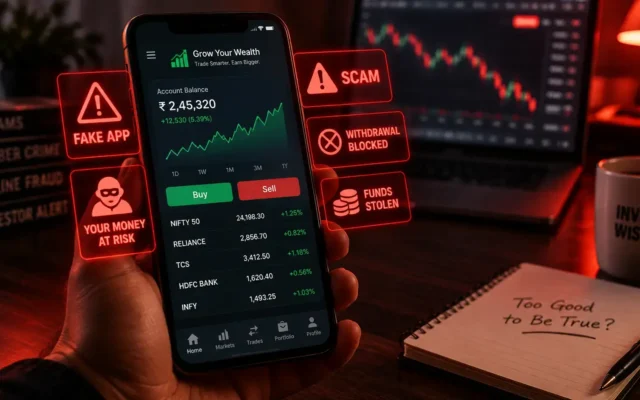
A massive ₹635-crore cyber fraud involving the “SD App” has just been busted by the Gujarat Police, exposing how thousands of everyday Indian investors are being targeted by organized syndicates. If you are currently using any mobile application that promises high daily returns or exclusive stock market tips, you are at immediate risk of falling victim to a highly sophisticated fake investment app scam India.
How the ₹635-Crore SD App Scam Works
The scale of this fraud is staggering, but the mechanics rely on psychological manipulation and digital illusion. The perpetrators do not just steal your money; they make you willingly transfer it under the guise of wealth creation.
The Illusion of High Returns
It starts with an invitation. You are added to a Telegram channel or a WhatsApp group where self-proclaimed “market gurus” share screenshots of massive trading profits. They convince you to download an application—like the now-infamous SD App—which is not available on the official Google Play Store or Apple App Store, but rather through a private link.
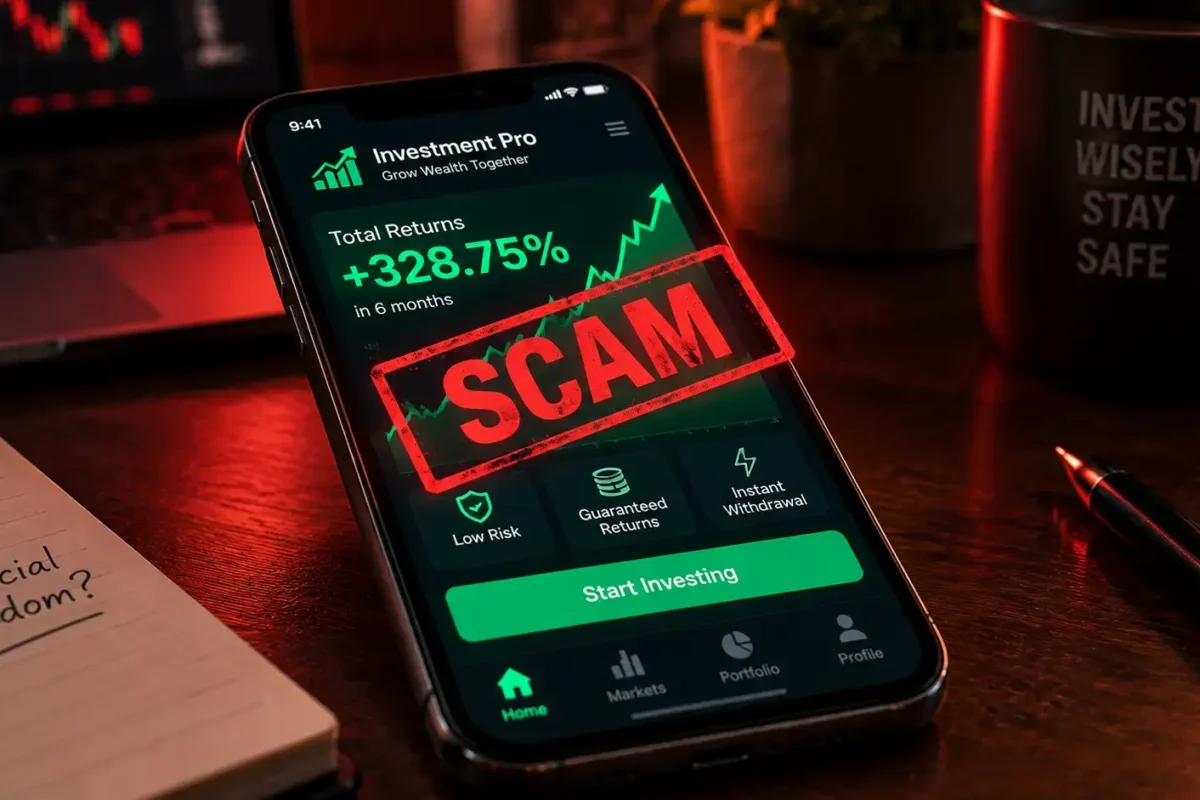
Once you download the app, the interface looks incredibly professional. It mimics real-time stock charts and shows your “account balance” growing rapidly. For instance, Rajesh, a software engineer from Ahmedabad, deposited ₹50,000 and watched his dashboard balance jump to ₹1,20,000 within just four days. It felt real. It looked real. It was completely fake.
The Deposit Trap and the Frozen Withdrawal
When Rajesh tried to withdraw a small test amount of ₹5,000, the app allowed it. This is a classic bait tactic used in almost every fake investment app scam India. It builds trust, prompting you to invest much larger sums—often your life savings or high-interest personal loans.
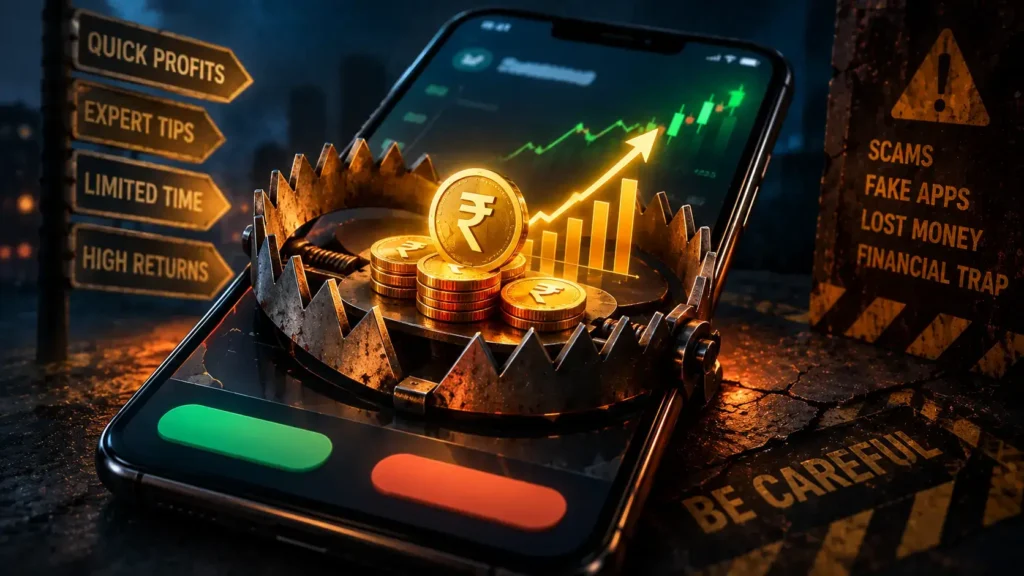
The trap snaps shut when you attempt a major withdrawal. Suddenly, the app blocks the transaction. You receive a message from “customer support” stating your account is frozen due to a tax discrepancy or a regulatory audit by SEBI. To release your funds, they demand a “clearance fee” or “processing tax” of 20% to 30% of your total balance. If you pay it, they disappear. If you refuse, they block you. Your money is gone.
| Stage of Scam | What the Victim Sees | The Reality Behind the Screen |
|---|---|---|
| 1. Initial Contact | Added to WhatsApp/Telegram group with “vouching” members | Paid actors and bots fabricating fake profit screenshots |
| 2. App Download | Sleek, custom dashboard showing rapid daily growth | A completely simulated portal with manually manipulated numbers |
| 3. Small Withdrawal | Successful transfer of ₹2,000–₹5,000 to bank account | Bait money paid out of previous victims’ deposits to build trust |
| 4. The Big Hit | Account frozen; demands for “taxes” to release funds | The final extortion phase before the scammers delete the app |
How to Protect Yourself from a Fake Investment App Scam India
The Gujarat Police investigation revealed that the stolen funds from the SD App were quickly routed through hundreds of shell current accounts opened in various banks using dummy identities, before being converted into cryptocurrency. To ensure you do not become another statistic in a fake investment app scam India, implement these non-negotiable rules immediately.
1. Verify Registration with SEBI
Every legitimate investment platform, portfolio manager, or sub-broker in India must be registered with the market regulator. If an app or advisor claims to offer stock trading, IPO allocations, or mutual fund schemes, demand their SEBI registration number. Cross-check this number directly on the official SEBI website. Do not rely on certificates displayed inside the app; these are easily forged using basic graphic design tools.
This type of digital deception is not limited to mobile applications. Many victims fall prey to similar tactics online, as detailed in our guide on the fake trading platform scam, which outlines how fraudulent websites manipulate data to steal your capital.
2. Never Install Apps via APK Links
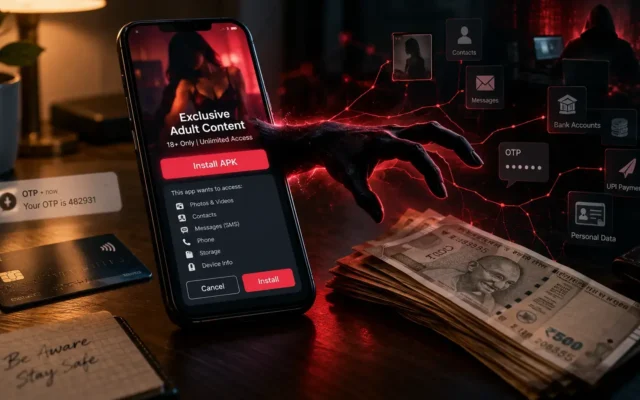
If an investment application requires you to download an APK file from a browser link, a WhatsApp chat, or a Telegram channel, stop immediately. Legitimate financial institutions distribute their apps through secure, vetted platforms like the Google Play Store or Apple App Store. While malicious apps occasionally slip into official stores, third-party APK downloads are a guaranteed red flag for malware and financial fraud.
3. Watch for the “Mule Account” Warning Sign
When you deposit money into a legitimate investment app, the funds go to a designated corporate account belonging to the brokerage. If an app instructs you to transfer money to various random individual bank accounts or obscure private limited companies via UPI or IMPS, you are dealing with a mule account network. This is a primary indicator of a fake investment app scam India.
Final Thoughts
The ₹635-crore SD App bust is a sobering reminder that cyber criminals are highly organized, operating with the precision of corporate enterprises. They exploit our natural desire for financial growth and turn it against us. If you have already lost money to a suspicious application, do not let embarrassment keep you silent. Every minute counts.
Immediately report the transaction to your bank to freeze the recipient accounts, and file an official complaint at the national cybercrime portal (cybercrime.gov.in) or call the national helpline at 1930. Staying vigilant is your absolute best defense in an era where financial predators are just a single click away.

This article is for awareness only. If you believe you have been targeted or have lost money to a scam, stop all further payments immediately, contact your bank, and report it to the National Cyber Crime Reporting Portal (cybercrime.gov.in) or call 1930.
One Email a Week. Five Things Worth Knowing.
- One important financial change that actually affects you
- One practical money lesson
- One useful calculator
- One common mistake to avoid
- One guide worth reading