

What Is a Credit Card? 7 Painful Truths About Missing Payments
A note on the examples: the people named in this article (Rahul, Priya) are imagined characters with round-number figures, used to show how the calculations and risks work. They are not real individuals or documented cases.
What Is a Credit Card and How Do Banks Respond If You Miss a Payment?
You swipe once. The payment feels small. The month moves fast.
Then one evening, around 11:47 PM, your phone vibrates.
“Your credit card payment is overdue.”
For many Indians, that message creates instant panic.
Not because they are irresponsible. But because life became expensive quietly.
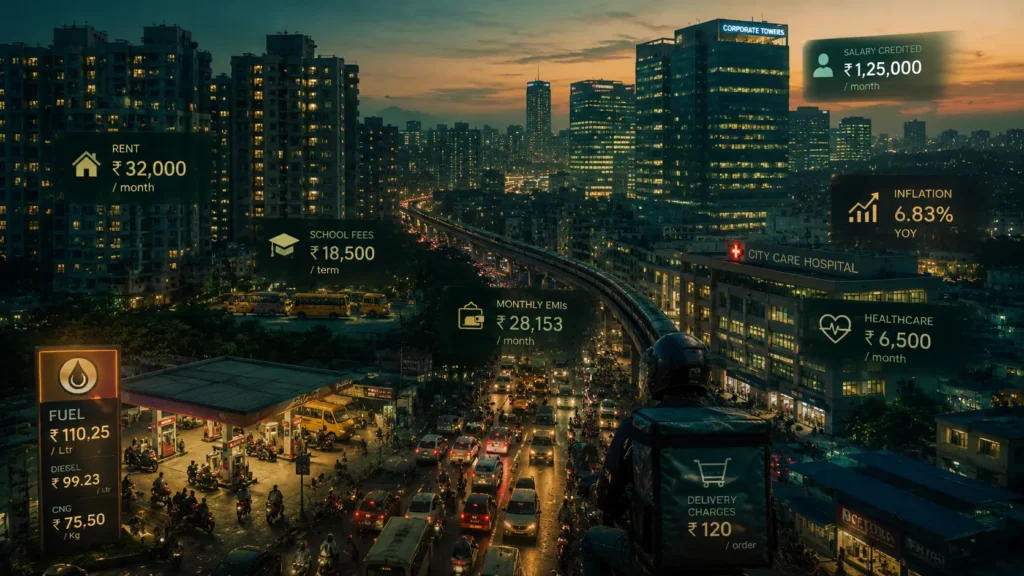
Rent increased. Petrol crossed expectations again. School fees came together. Swiggy orders piled up. A medical emergency arrived at the wrong time. Salary came late. Suddenly, a credit card that once felt “helpful” started feeling dangerous.
That’s the emotional reality behind the question: What Is a Credit Card and How Do Banks Respond If You Miss a Payment?
The answer is more serious than most people realize.
Because banks don’t simply “wait.” They follow structured recovery systems. Your CIBIL score can fall. Interest compounds daily. Recovery calls begin. And financially, one missed payment can quietly damage the next 3–5 years of your life.
Still, recovery is possible.
As per CNBC-TV18 reported that overdue credit card bills in India jumped by 44% within one year. Overdues between 91–360 days reportedly crossed Rs. 33,000 crore by March 2025. “This is no longer just a personal finance issue. India is quietly entering a credit card stress era.”
This guide explains exactly how credit cards work in India, what banks actually do after missed payments, and how ordinary Indians emotionally and financially recover from debt pressure.
Last verified against official RBI and bank sources: May 2026.

Key Takeaways
- A credit card is borrowed money from a bank with repayment deadlines.
- Missing even one payment can trigger late fees, GST, interest, and CIBIL score damage.
- Banks usually begin reminders within 1–3 days after the due date.
- Long delays can lead to collection calls, settlement offers, and legal escalation.
- RBI has strict recovery guidelines for banks and recovery agents.
- Most Indians fall into debt due to emergencies, inflation pressure, or poor financial planning — not luxury spending alone.
- Recovery becomes easier when you act early instead of avoiding the problem.
What Is a Credit Card and How Do Banks Respond If You Miss a Payment?
A credit card is a financial product that lets you borrow money from a bank up to a pre-approved limit. You spend first and repay later within a billing cycle.
If repayment is delayed, the bank charges:
- Late payment fees
- High interest rates
- GST on charges
- Penal interest in some cases
- Credit score penalties
According to the Reserve Bank of India (RBI), banks must follow transparent recovery practices and disclose charges clearly.
But emotionally, the experience often feels far harsher than the fine print suggests.
The Middle-Class Trap Nobody Talks About
“You’re earning more than before. Yet somehow money disappears faster.”
That line describes millions of Indian salaried workers today.
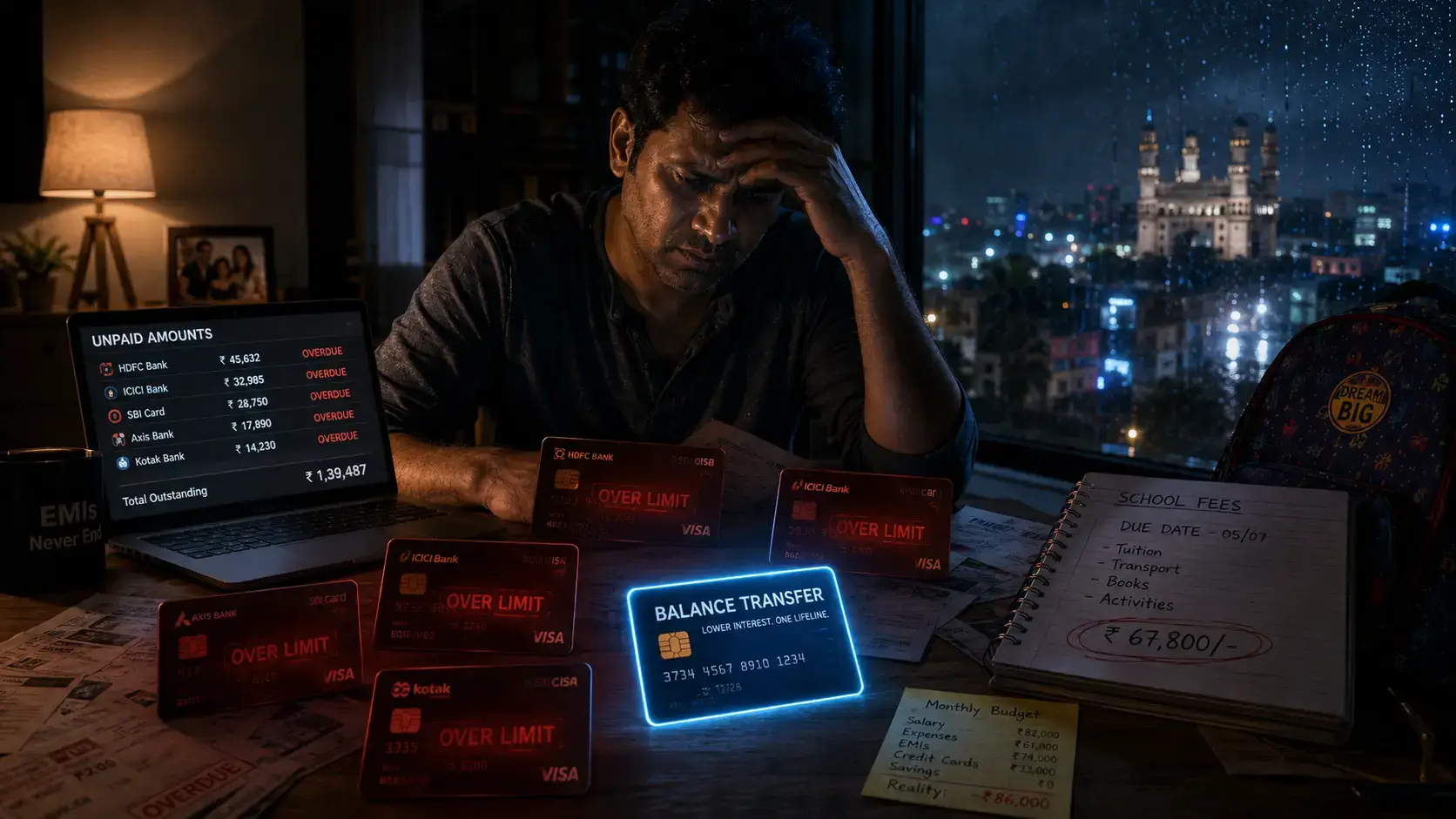
Take Rahul, a 31-year-old software employee from Hyderabad.
His salary was Rs. 82,000 per month. Good on paper.
But reality looked different:
| Monthly Expense | Amount |
|---|---|
| Rent | Rs. 24,000 |
| Bike EMI | Rs. 5,400 |
| Parents support | Rs. 12,000 |
| SIPs + Insurance | Rs. 7,500 |
| Food + groceries | Rs. 10,000 |
| Fuel + travel | Rs. 6,000 |
| Credit card minimum dues | Rs. 9,000 |
By the 22nd of every month, his account balance usually dropped below Rs. 4,000.
Then his father needed hospitalization.
Rahul used his credit card heavily. At first, it felt manageable.
Until he missed one payment.
That single delay triggered:
- Rs. 1,200 late fee
- GST on penalties
- 42% annualized interest
- Continuous reminder calls
- A sharp drop in his CIBIL score
This is exactly why understanding What Is a Credit Card and How Do Banks Respond If You Miss a Payment matters before debt becomes emotional.
How Credit Cards Actually Work in India
A credit card is not free money.
It is short-term borrowing.
Here’s the basic structure:
Credit Card Billing Cycle
| Stage | Meaning |
|---|---|
| Billing Date | Total monthly spending calculated |
| Statement Generated | Bank sends amount due |
| Due Date | Final repayment deadline |
| Minimum Due | Small mandatory amount to avoid immediate default |
| Interest-Free Period | Usually 18–50 days |
The dangerous part?
Many people think paying the “minimum due” solves the problem permanently.
It doesn’t.
Interest continues on remaining balances.
According to HDFC Bank’s official credit card guide, revolving balances can attract extremely high annualized interest rates.
What Happens Immediately After You Miss a Credit Card Payment?
If you’re wondering What Is a Credit Card and How Do Banks Respond If You Miss a Payment, here’s the real timeline most Indian banks follow.
Day 1–3: SMS and Email Reminders
Initially, banks stay polite.
You receive:
- SMS alerts
- Email reminders
- App notifications
Most people ignore this stage due to embarrassment or denial.
That mistake becomes expensive later.
Day 7–15: Late Fees Begin
At this stage:
- Late payment charges apply
- GST gets added
- Interest compounds daily
Example Calculation
| Outstanding Balance | Rs. 78,000 |
|---|---|
| Interest Rate | 3.5% monthly |
| Late Fee | Rs. 1,200 |
| GST | Rs. 216 |
| Total After One Month | Approx. Rs. 82,146 |
Many Indians underestimate how fast revolving debt grows.
Recent reports showed SBI Card revised its late payment penalty structure from May 2026, increasing consequences for repeated missed payments.
Day 30+: CIBIL Score Damage Starts
Banks report delays to credit bureaus like:
- TransUnion CIBIL
- Experian
- Equifax
Even one missed payment can reduce your score significantly.
And that creates future problems:
- Loan rejection
- Higher interest rates
- Lower credit limits
- Difficulty getting home loans
According to TransUnion CIBIL, repayment history is among the most important factors affecting credit scores.
Priya’s Silent Debt Spiral
Priya worked in Pune in a digital marketing agency.
Salary: Rs. 54,000.
Outwardly, life looked stable.
Instagram dinners. Weekend cafes. Online shopping. EMI-based iPhone purchase.
But underneath?
She was exhausted financially.
After rent and family responsibilities, she began depending on credit cards for normal monthly expenses.
Then her company delayed salaries for two months.
She missed one payment.
Then another.
Soon:
- Recovery calls started during office hours
- Anxiety attacks increased
- She stopped checking her banking apps
- Her CIBIL score crashed below 650
The worst part wasn’t the money.
It was shame.
Many Indian families look financially stable from outside while drowning silently in EMIs.

How Banks Escalate Recovery Efforts
When users search What Is a Credit Card and How Do Banks Respond If You Miss a Payment, they often assume banks immediately file legal cases.
Usually, recovery happens in stages.
Stage 1: Reminder Calls
Initially:
- Customer support teams contact you
- Settlement reminders increase
- Minimum payment requests begin
Young Gujarat Borrower Hiding From Recovery Calls
A 22-year-old borrower from Gujarat posted online saying he had accumulated around Rs. 3.7–4 lakh in debt across multiple banks including HDFC, ICICI, Axis, Yes Bank, and RBL. He admitted changing his phone number due to nonstop recovery calls because he could no longer afford even minimum dues.
"He wasn’t trying to escape responsibility. He was simply financially exhausted".
Stage 2: Recovery Department Involvement
After longer delays:
- Internal recovery teams take over
- Calls become more frequent
- Negotiation attempts start
RBI guidelines require banks to avoid harassment or abusive recovery methods.
You can review official practices at RBI Fair Practices Code.
Stage 3: Recovery Agents
For severe overdue cases:
- Third-party recovery agents may get involved
- Home visits can occur
- Settlement discussions intensify
However:
- Threats are illegal
- Public humiliation is prohibited
- Physical intimidation violates RBI norms
India Today reported that RBI has repeatedly warned against abusive recovery practices after multiple cases involving threats, workplace humiliation, and aggressive recovery tactics from lenders and apps.
“For many borrowers, the fear is no longer just the money. It’s the humiliation.”

The Most Dangerous Mistake: Avoiding the Bank
Financial anxiety is exhausting because it follows you even while sleeping.
And when people feel ashamed, they disappear.
They stop:
- Answering calls
- Opening emails
- Checking statements
Unfortunately, silence makes banks more aggressive.
The smarter approach is early communication.
Many banks offer:
- EMI conversion
- Temporary restructuring
- Settlement plans
- Hardship assistance
Checklist: What To Do Immediately After Missing a Payment
If you already missed a credit card payment:
- Pay at least the minimum due immediately
- Contact the bank before recovery escalation
- Stop unnecessary UPI and food delivery spending temporarily
- Avoid taking new loans to repay old loans
- Check your updated CIBIL score
- Request EMI conversion if eligible
- Build a strict monthly budget
- Track every subscription and auto-debit
How Minimum Due Traps Indian Families
One of the most misunderstood parts of What Is a Credit Card and How Do Banks Respond If You Miss a Payment is the “minimum due” system.
Banks allow small minimum payments because:
- It reduces immediate default risk
- Customers continue paying interest
- Debt survives longer
Delhi Man Trapped for 3 Years
A Reddit user from Delhi shared that he got his first credit card in 2016 and slowly fell into revolving debt after overspending. For nearly three years, he kept paying only the minimum due of around Rs. 5,205, but the principal barely reduced. Eventually, he used his Provident Fund savings to clear the debt completely.
For example:
| Credit Card Balance | Rs. 1,20,000 |
|---|---|
| Minimum Due | Rs. 6,000 |
| Monthly Interest | Approx. 3–4% |
| Estimated Debt Duration | Several years |
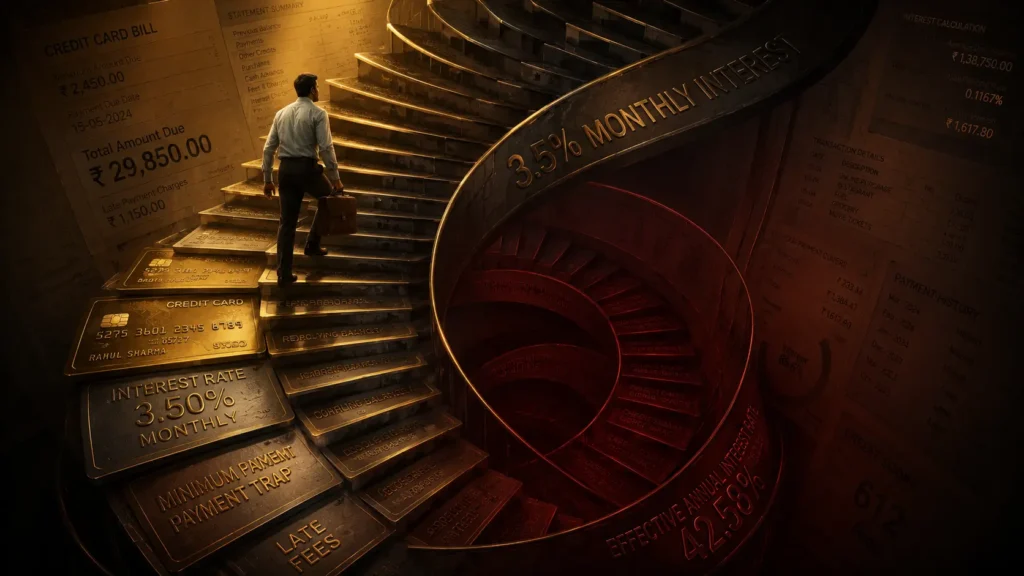
That’s why minimum dues create emotional illusion.
The account looks “active,” but financially, the borrower remains trapped.
The Psychological Side of Credit Card Debt
Nobody teaches money management in school.
Then society judges you for not knowing it.
Credit card debt often creates:
- Sleep problems
- Relationship fights
- Work stress
- Self-esteem collapse
- Constant guilt
Especially among Indian middle-class earners who feel pressure to “look stable.”
Sometimes the spending isn’t luxury at all.
It’s:
- Hospital bills
- Family emergencies
- Wedding pressure
- School fees
- Temporary unemployment
Understanding this matters deeply.
Because recovery requires emotional honesty, not just budgeting apps.
7 Smart Ways Indians Recover After Missing Payments
1. Stop Using the Card Temporarily
The first fix is behavioural.
If spending continues, recovery becomes impossible.
2. Convert Outstanding Balance Into EMI
Many banks allow structured repayment plans with lower effective rates.
3. Prioritize High-Interest Debt First
Clear:
- Credit cards
before: - Personal loans
- Low-interest EMIs
4. Increase Income Temporarily
Some Indians recover faster through:
- Freelancing
- Weekend tutoring
- Selling unused gadgets
- Small side businesses
5. Avoid Multiple New Credit Cards
This worsens credit utilization and creates repayment confusion.
6. Build an Emergency Fund Slowly
Even Rs. 2,000–Rs. 5,000 monthly savings creates future protection.
7. Check Your CIBIL Regularly
Monitoring your score helps track recovery progress.
“The salary increased. The stress increased too.”
That sentence explains modern urban financial life better than most economics textbooks.
Comparison Table: One Missed Payment vs Six Months Delay
| Situation | One Missed Payment | 6 Months Non-Payment |
|---|---|---|
| Late Fees | Moderate | Very High |
| Interest | Starts immediately | Compounds heavily |
| CIBIL Impact | Noticeable | Severe |
| Recovery Calls | Limited | Frequent |
| Loan Eligibility | Reduced temporarily | Major rejection risk |
| Legal Escalation | Rare | Possible |
Can Banks Take Legal Action?
Yes — but usually after prolonged non-payment.
If dues remain unpaid for long periods:
- Legal notices may be sent
- Arbitration can happen
- Civil recovery processes may begin
However, jail threats for ordinary unsecured credit card debt are generally misleading unless fraud is involved.
Always verify legal claims directly with the bank.
Feeling Financially Stuck?
Check your current credit score and total debt exposure today — not next month.
The earlier you face the numbers, the easier recovery becomes.
Explore CIBIL Score Explained – 7 Important Facts Indians Must Know
FAQ — What Is a Credit Card and How Do Banks Respond If You Miss a Payment?
Does one missed payment ruin your CIBIL score permanently?
No. But it can reduce your score significantly for several months. Consistent future repayment improves recovery chances.
Can banks call family members after missed credit card payments?
Banks may attempt contact for communication purposes, but harassment or public humiliation violates RBI recovery guidelines.
What happens if I only pay the minimum due?
Interest continues on the remaining amount. Debt can grow for years if only minimum dues are paid.
Can I negotiate with the bank after missing payments?
Yes. Many banks offer restructuring, EMI conversion, or settlement discussions depending on your situation.
How long does credit card recovery take?
Financial recovery may take:
3–6 months for small delays
1–3 years for severe debt situations
CIBIL score recovery depends on repayment consistency.
Is settlement bad for future loans?
Yes, settlements may hurt future loan eligibility because lenders view “settled” differently from “fully paid.”
What should I do first after missing a payment?
The fastest action is:
Pay minimum due immediately
Contact the bank
Stop fresh discretionary spending
Create a repayment plan
Conclusion
Understanding What Is a Credit Card and How Do Banks Respond If You Miss a Payment is not just about banking rules.
It’s about emotional survival in expensive times.
Credit cards themselves are not evil. In emergencies, they genuinely help millions of Indian families.
But delayed repayments become dangerous when ignored emotionally.
The real damage often starts with silence:
- avoiding statements
- avoiding calls
- pretending the problem will disappear
It rarely does.

Tonight, before sleeping, check every EMI and credit card payment leaving your bank account.
Most people discover the real financial pressure right there.
And if you’re already struggling, remember this carefully:
Money mistakes feel heavy when you’re carrying them alone. You do not have to stay stuck there forever.
This article is educational in nature and should not be considered legal or financial advice.
Comment Your Answers in Comment Section:
What’s the biggest financial mistake you recovered from — or are still trying to fix today?

This article is for educational purposes only and does not constitute financial advice. Figures, examples, and outcomes are illustrative and vary based on individual circumstances and lender policies. Always consult a certified financial advisor before making major financial decisions.
One Email a Week. Five Things Worth Knowing.
- One important financial change that actually affects you
- One practical money lesson
- One useful calculator
- One common mistake to avoid
- One guide worth reading