

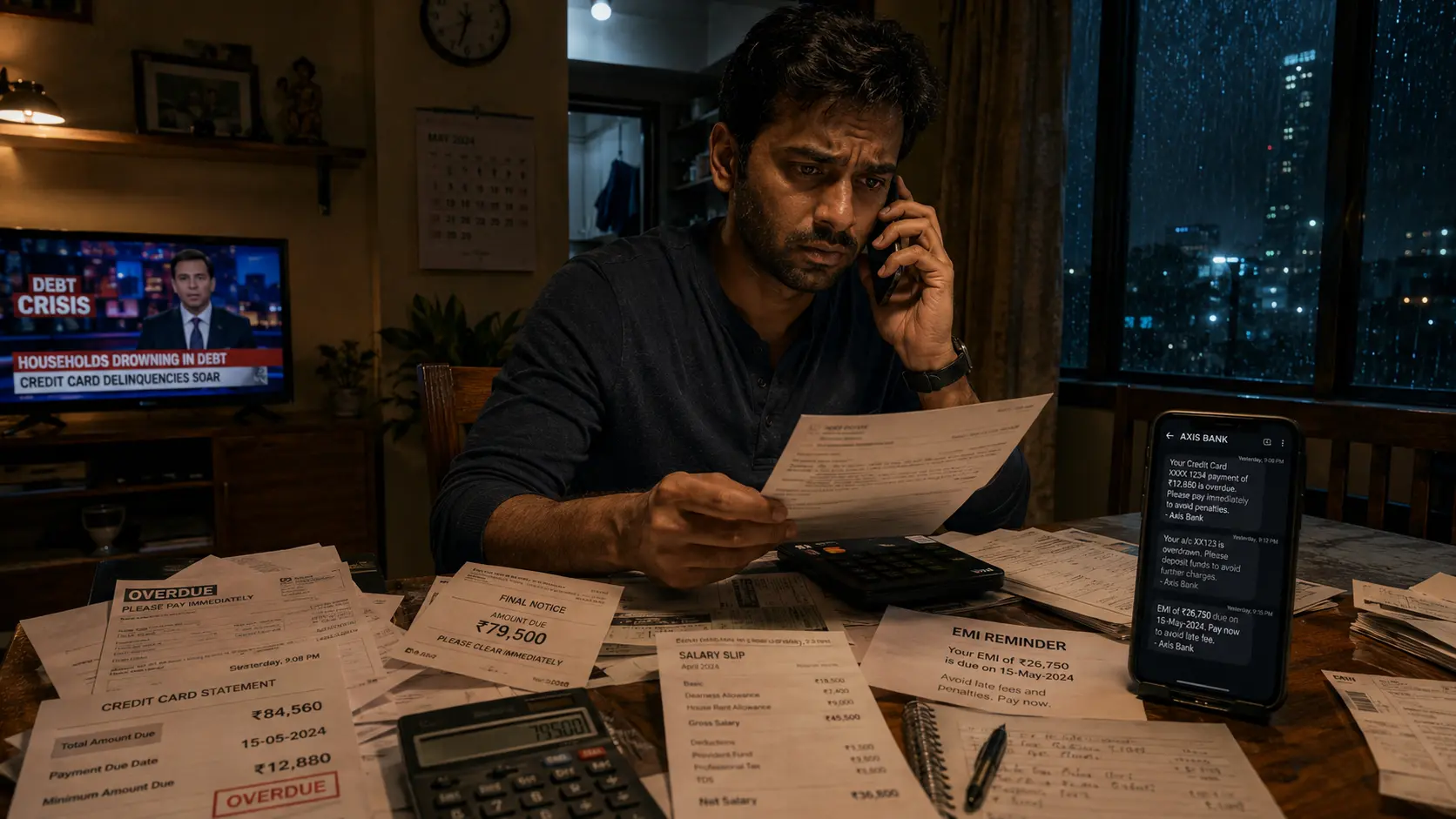
How To Negotiate Credit Card Debt in India Without Destroying Your CIBIL Score in 2026
A note on the examples: the people named in this article (Ravi, Priya, Rohit) are imagined characters with round-number figures, used to show how the calculations and risks work. They are not real individuals or documented cases.
How To Negotiate Credit Card Debt in India Without Destroying Your CIBIL Score
Introduction
If you are searching for how to negotiate credit card debt in India, chances are the pressure has already started building.
Collection calls. Rising interest. Sleepless nights.
If negotiating directly with your issuer isn’t realistic for your situation, a balance transfer card or debt consolidation may be a better fit.
And here’s the reality most banks won’t openly tell you:
If you don’t learn how to negotiate credit card debt early, your outstanding amount can spiral out of control faster than you expect.
Thousands of Indians keep paying only minimum dues every month without understanding how dangerous revolving credit card interest really is.
That Rs. 1.2 lakh balance can quietly become Rs. 2 lakh.
The good news?
Learning how to negotiate credit card debt properly can reduce interest burden, stop financial stress, and help you regain control before things become legally messy.
But negotiation done the wrong way can destroy your CIBIL score for years.
This guide explains exactly how to negotiate credit card debt in India, how banks think, what RBI rules say, what settlement really means, and how to protect yourself while getting relief.
Key Takeaways
- Credit card interest in India can cross 36% annually.
- Banks are often willing to negotiate if you act early.
- Settlement hurts your CIBIL score more than structured repayment.
- RBI rules protect borrowers from harassment.
- A lump-sum offer usually works better than emotional pleading.
- Ignoring calls makes the situation worse.
- Negotiating smartly can save lakhs in interest.
Why Credit Card Debt Becomes Dangerous
Credit cards are marketed like rewards machines.
Free lounge access. Cashback. Instant discounts. EMI conversion.
But the moment you fail to pay the full bill, the game changes completely.
Most Indian credit cards charge between 30% and 42% annualized interest. That is worse than many personal loans.
Let’s make this real.
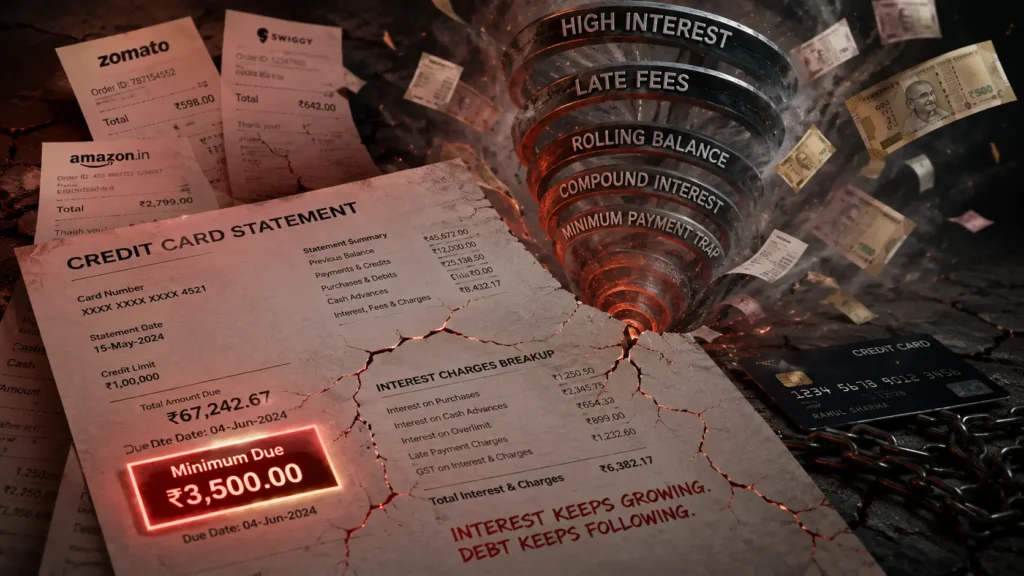
Rs. Calculation Example
Suppose Ravi from Hyderabad has:
- Credit card debt: Rs. 2,00,000
- Interest rate: 3.5% monthly
- Minimum due paid monthly: Rs. 10,000
Looks manageable?
Not really.
At 3.5% monthly interest:
A=P(1+nr)nt
PV
r(%)
n24681012141618205001000150020002500$2,653.306.7, 1385.5
Ravi could end up paying more than Rs. 3.3 lakh over time if he keeps revolving debt instead of aggressively clearing it.
That bike EMI and weekend Zomato orders suddenly become very expensive decisions.
And this is exactly why learning how to negotiate credit card debt matters before the situation explodes.
How To Negotiate Credit Card Debt With Indian Banks
Yes.
Banks negotiate all the time.
Why?
Because recovering some money is better than recovering nothing.
When borrowers stop paying for several months, banks classify accounts as stressed assets. Recovery becomes costly and uncertain.
So banks may offer:
- Reduced lump-sum settlement
- Interest waiver
- EMI restructuring
- Lower repayment plans
- Temporary hardship programs
But here’s the catch.
Banks help people who communicate early.
If you disappear for 8 months and ignore every call, your leverage drops sharply.
Best Time to Negotiate With Banks
Timing matters more than people think.
The best time to negotiate credit card debt is:
1. After Financial Hardship Starts
Examples:
- Job loss
- Salary cut
- Medical emergency
- Business slowdown
Banks respond better when hardship is genuine and documented.
2. Before Legal Escalation
If recovery agents and legal notices have already started, options become narrower.
3. When You Can Offer Lump Sum
A bank is more likely to accept:
- Rs. 80,000 today
instead of:
- Rs. 1.5 lakh uncertain over 3 years
Liquidity talks.
Emotion doesn’t.
Step-by-Step Process for how to Negotiate Credit Card Debt
Step 1: Know Your Exact Numbers
Before talking to the bank, collect:
- Total outstanding amount
- Interest charges
- Late fees
- Minimum due
- Months overdue
Never negotiate blindly.
Priya from Bengaluru thought she owed Rs. 95,000. After reviewing statements carefully, she realized nearly Rs. 28,000 was only interest and penalties.
That changed the conversation completely.
Step 2: Decide Your Goal
Are you trying to:
- Reduce interest?
- Get more time?
- Settle completely?
- Avoid legal action?
- Protect CIBIL score?
Different goals require different negotiation strategies.
Step 3: Call the Hardship or Settlement Team
Do not scream at customer care.
That accomplishes nothing.
Ask politely for:
- Retention team
- Hardship department
- Settlement desk
Be factual.
Not emotional drama.
Example Script
“I’ve had a genuine financial setback and I want to resolve this responsibly. I cannot manage the current payment structure. Can we discuss a restructuring or settlement option?”
Simple. Calm. Professional.
Step 4: Start Lower Than Your Actual Budget
If you can afford Rs. 90,000 settlement:
Do not start at Rs. 90,000.
Start lower.
Banks negotiate expecting counteroffers.
Step 5: Get Everything in Writing
This is critical.
Never trust verbal promises from collection agents.
Before paying anything, ask for:
- Settlement letter
- Final closure amount
- Payment deadline
- Written confirmation
Without documentation, future disputes can happen.+
A Ready-to-Send Letter to Your Bank
Calling is fine, but a written request gives you a record. Fill in the brackets, send it from your registered email or through your bank’s official complaint or hardship channel, and keep a copy. Do not pay anything until the terms are confirmed in writing.
Copy and send this to your card issuer
Subject: Request for a repayment arrangement – Credit Card ending [last 4 digits]

Dear Customer Care / Hardship Team,

I hold a credit card with your bank (card ending [XXXX], customer ID [ID]). My current outstanding balance is Rs. [amount]. Because of [short reason, for example reduced income or medical expenses], I am finding it difficult to continue with the current minimum-due payments.

I want to repay this balance in full and request a revised arrangement. Please share in writing:
1. The exact outstanding principal, interest and charges as of today
2. Whether a reduced interest rate, a longer instalment plan or a one-time settlement is available for my account
3. The total amount payable under each option and the date by which it must be paid
4. How the account will be reported to the credit bureaus once the arrangement is complete

I can pay Rs. [amount] per month or Rs. [lump sum] as a one-time payment. I will not make any payment until I receive the terms in writing.

Please confirm receipt and tell me the next steps.

Regards,
[Your name]
[Registered mobile number and email]
This is a template, not legal advice. Offers differ by bank and by how long the account has been overdue, and a settlement can show on your credit report. Our guide on debt relief scams explains why you should never pay a third party an upfront fee to do this for you.
Debt Settlement vs Restructuring
Many Indians confuse these two.
Big mistake.
Debt Settlement
You pay less than total outstanding.
Example:
- Total due: Rs. 2 lakh
- Settlement: Rs. 1.1 lakh
Sounds good initially.
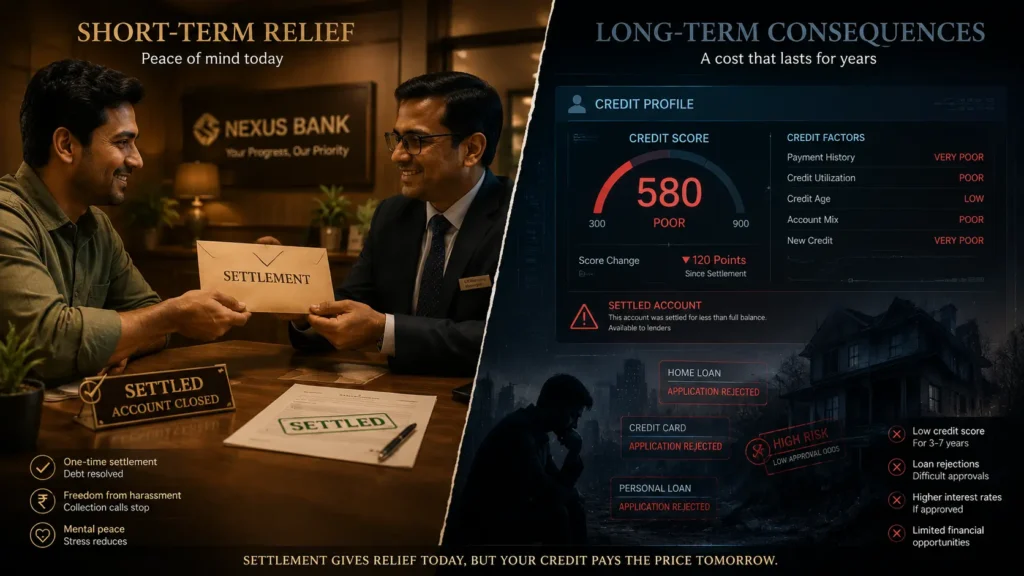
But the account may be marked “Settled” instead of “Closed” in your credit report.
That hurts your CIBIL score.
Debt Restructuring
The bank modifies repayment terms.
Examples:
- Lower EMI
- Longer tenure
- Reduced interest
This is usually better for long-term credit health.
If possible, restructuring is safer than settlement.

Some Imagined Scenarios
Scenario 1: Salary Cut Trap
Manoj from Pune earned Rs. 75,000 monthly.
Then his company reduced salaries during layoffs.
He kept paying minimum dues on 3 credit cards while maintaining the same lifestyle.
Swiggy. iPhone EMI. Goa trips.
Within 14 months:
- Total debt: Rs. 4.8 lakh
- Monthly interest alone: nearly Rs. 14,000
After negotiating, he converted dues into a structured EMI at lower interest.
But he admitted the real issue wasn’t income.
It was denial.
Scenario 2: Medical Emergency
Aarti from Chennai used credit cards during her father’s hospitalization.
Debt rose to Rs. 2.3 lakh.
She immediately informed the bank, submitted medical documents, and requested hardship support.
Result:
- Interest partially waived
- EMI tenure extended
- Recovery pressure reduced
Early communication saved her from default escalation.
Scenario 3: Ignoring Calls Made Things Worse
Rohit from Delhi stopped answering collection calls for 7 months.
By then:
- Penalties exploded
- Legal notices started
- CIBIL damage became severe
Eventually he settled, but his credit profile suffered heavily.
Silence is expensive.
Common Mistakes People Make While Learning How To Negotiate Credit Card Debt
Paying Only Minimum Due Forever
This is the biggest trap in Indian personal finance.
Minimum due is designed to keep you in debt longer.
Not free you.
Taking New Loans to Hide Old Debt
Many people use:
- Buy Now Pay Later
- Personal loans
- New credit cards
to hide old debt temporarily.
That’s financial musical chairs.
Eventually the music stops.
Lying to Banks
Banks can often verify:
- Salary credits
- Existing loans
- Credit activity
Fake stories damage credibility.
Continuing Luxury Spending
If your Instagram shows Bali vacations while asking banks for hardship relief, don’t expect sympathy.
Banks notice spending patterns.
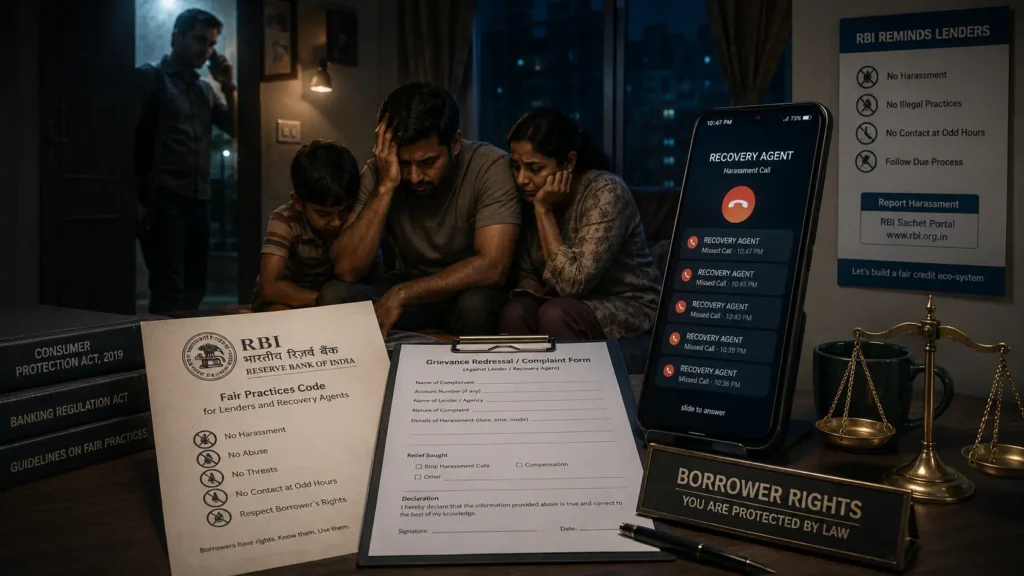
What RBI Rules Say About Recovery Agents
The Reserve Bank of India has guidelines against harassment by recovery agents.
Recovery agents cannot:
- Threaten borrowers
- Abuse family members
- Call excessively at odd hours
- Publicly shame borrowers
If harassment happens, you can complain to:
Knowing your rights matters.
But remember:
Rights do not erase debt.
You still need a repayment strategy.
How Debt Settlement Affects CIBIL Score
This is where many people regret rushing into settlements.
If your account status becomes:
- “Settled”
instead of: - “Closed”
future lenders may see you as risky.
Possible consequences:
- Personal loan rejection
- Higher interest rates
- Lower credit card limits
- Difficulty getting home loans
Before vs After Example
Before Settlement
- CIBIL Score: 780
- Easy loan approvals
- Better credit card offers
After Poorly Managed Settlement
- CIBIL Score: 610
- Loan rejection risk
- Higher borrowing costs
A short-term escape can become a long-term penalty.
Alternatives to Credit Card Settlement
Sometimes negotiation is not the best solution.
Consider:
Personal Loan Balance Transfer
Lower interest than revolving credit cards.
Debt Snowball Method
Pay smallest debts first for momentum.
Read to Know more about Debt Snowball Method and how its work.
Debt Avalanche Method
Pay highest-interest debt first.
This mathematically saves more money.
Read to Know more about Debt Avalanche Method and how its work.
Expense Surgery
Not budgeting.
Surgery.
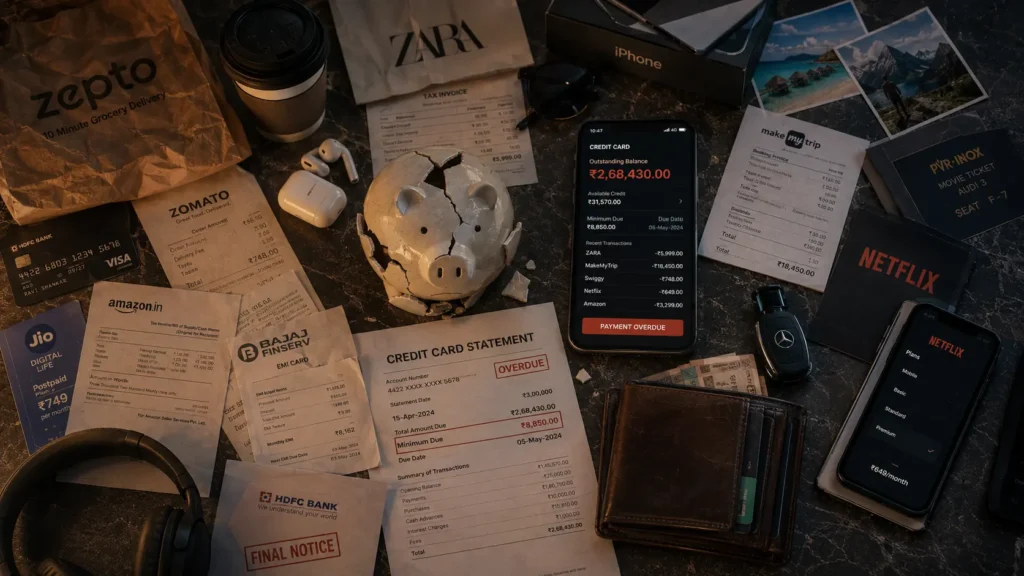
If you earn Rs. 55,000 and spend:
- Rs. 7,000 on food delivery
- Rs. 4,500 on subscriptions
- Rs. 9,000 on shopping EMIs
then debt is not only an income problem.
It’s a behavior problem.
That truth hurts.
But it also fixes things faster.
Frequently Asked Questions
How To Negotiate Credit Card Debt Without Hurting CIBIL Score?
The best way to handle how to negotiate credit card debt without severe CIBIL damage is to prioritize restructuring over settlement whenever possible.
Will settling credit card debt hurt my CIBIL score?
Yes, settlement can negatively impact your CIBIL score if the account is marked as “Settled” instead of “Closed.”
What is the best way to negotiate credit card debt?
The best approach is:
Know your outstanding amount
Offer realistic repayment
Stay professional
Request written confirmation
That’s the safest way to negotiate credit card debt
Can banks waive credit card interest?
Sometimes. Especially during hardship situations involving job loss, medical emergencies, or prolonged financial stress.
Should I use a personal loan to clear credit card debt?
In some cases, yes.
A lower-interest personal loan can reduce overall interest burden compared to revolving credit card debt.
But only if spending habits change too.
How long does debt settlement stay on CIBIL report?
Typically, settlement history may remain visible for several years and affect future loan approvals.
Is Hiring Agencies for How To Negotiate Credit Card Debt Worth It?
Some agencies help borrowers negotiate settlements, but many charge high fees. Always compare costs before outsourcing how to negotiate credit card debt.
Conclusion
Learning how to negotiate credit card debt is not about escaping responsibility.
It is about preventing financial collapse before interest and penalties take complete control of your income.
The earlier you understand how to negotiate credit card debt, the stronger your negotiating power usually becomes.
Ignore the problem, and banks gain leverage.
Act early, communicate professionally, and focus on fixing the spending habits that created the debt in the first place.
Because the real goal of learning how to negotiate credit card debt is not just settling dues.
It is rebuilding financial stability permanently.
Talk to the bank early.
Negotiate calmly.
Protect your CIBIL score wherever possible.
And most importantly — fix the behavior that created the debt in the first place.
Because no settlement letter can solve a spending addiction.

This article is for educational purposes only and does not constitute financial advice. Figures, examples, and outcomes are illustrative and vary based on individual circumstances and lender policies. Always consult a certified financial advisor before making major financial decisions.
One Email a Week. Five Things Worth Knowing.
- One important financial change that actually affects you
- One practical money lesson
- One useful calculator
- One common mistake to avoid
- One guide worth reading